
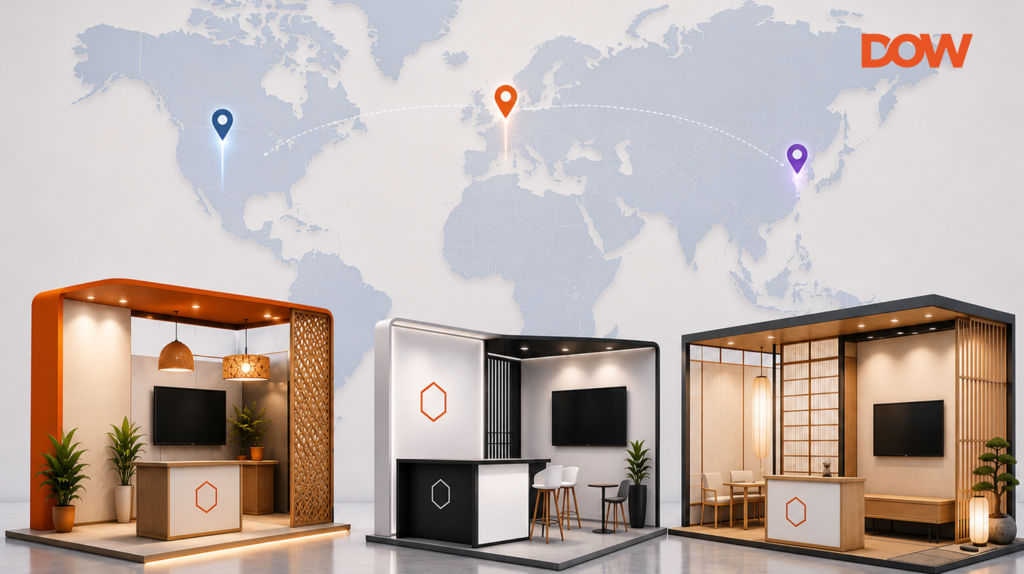
Introduction
A local brand can go global, but its experience cannot remain the same everywhere, its exhibition experience cannot be easily transferred from one market to another.
An exhibition stand that attracts attention in one country may require a completely different approach in another. A product launch that creates excitement in India may call for a more understated experience in another international market. The brand remains the same but the way people experience it can, and often should, change.
For brands participating in international trade shows, exhibitions, and industry events, the challenge is no longer just about creating an impressive stand. It is about creating an experience that feels relevant, familiar, and meaningful to the audience walking into it.
One Brand Identity, Different Ways of Experiencing It
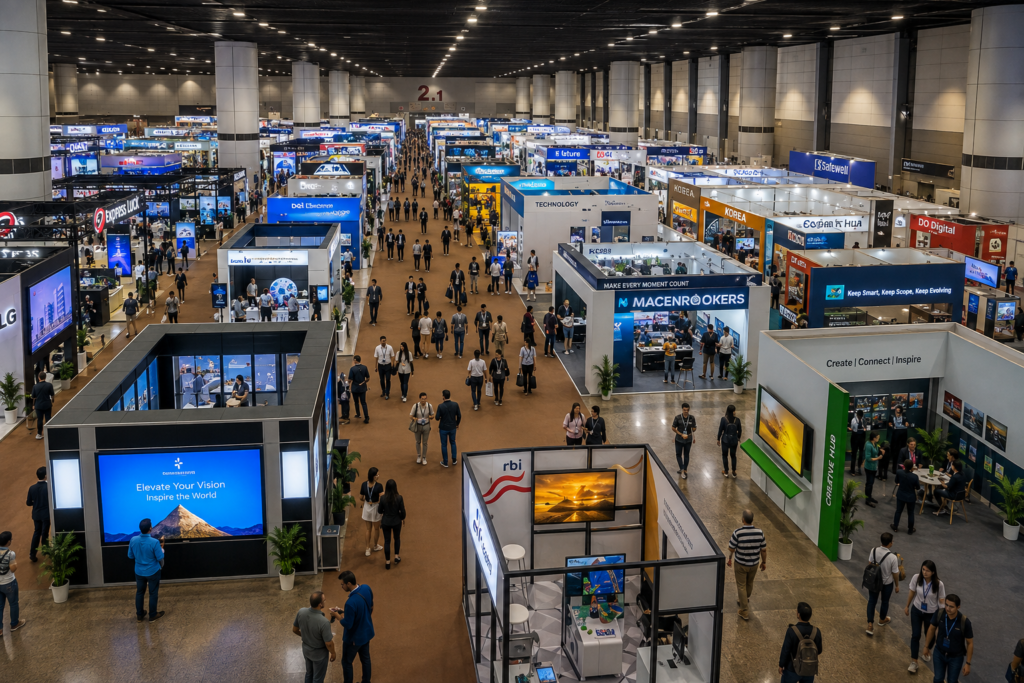
A distinct, recognizable brand identity is the first step in a successful international exhibition strategy, but using the same stand design in every location rarely has the same effect.
The brand doesn’t change. The experience changes.
Whether consumers come across a brand in any country, it is instantly recognizable thanks to its logo, color scheme, typography, messaging. The way that identity is implemented, the design, materials, interactions, and cultural clues that make it resonate with each local audience can and should be flexible.
The Exhibition Floor Is Changed by Culture
Exhibitions are very immersive settings. A brand message is not just read by visitors; they also see, hear, engage with, and occasionally even physically experience it.
For instance, depending on how guests prefer to interact, different booth layouts may be perfect. Visitors may feel at ease visiting an open stand in certain marketplaces and striking up a chat right away. Others might feel that a more formal or structured exchange is appropriate.
The Exhibition’s Role in Cultural Discussion
An exhibition stand shouldn’t appear out of place at a neighborhood event.
It should seem like a company that knows where it is. That does not mean filling a stand with stereotypical cultural references. In fact, over-localization can sometimes feel forced.
Instead, cultural relevance can be built into the experience more subtly. It could be the way information is presented, the way meeting spaces are planned,
type of product demonstration used, balance between technology and human interaction, or the way hospitality is incorporated, or by simply the tone in which visitors are welcomed.
These choices communicate something before a salesperson says a single word-
“We understand this market.”
From Typical Booths to Tailored Experiences
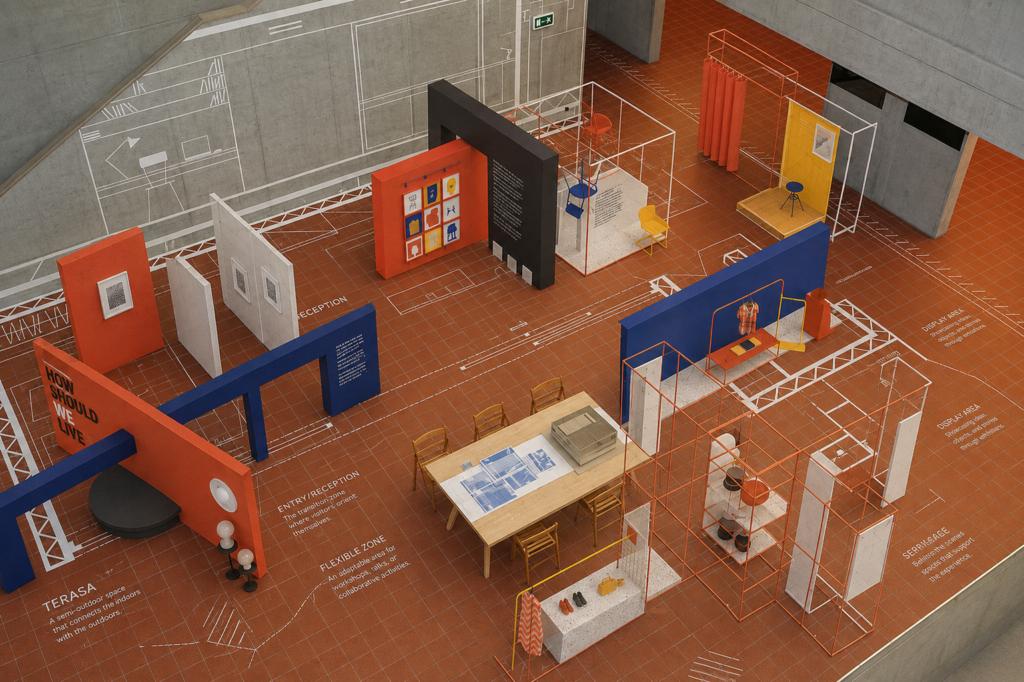
In the past, international exhibitors have frequently used a basic display concept and replicated it in various events. There are clear benefits to this strategy. It improves worldwide brand recognition, produces uniformity, and shortens design time. However, repetition can also be problematic.
The stand may become predictable rather than memorable if guests have the same experience at each exhibition.
What should be different in this situation?
This can entail altering the visitor experience while keeping the same brand architecture. or maintaining the same product narrative while modifying the marketing and demonstrations to suit regional industry demands.
It may also entail reconsidering how customers navigate the stand, how merchandise is presented, and how discussions are started. While formal meeting spaces and in-depth product conversations may be more effective in one market, a more open and interactive layout may promote engagement in another.
Knowing Your Local Audience Before Designing
Effective global exhibition design starts long before the stand is created.
Brands must ascertain who will actually attend the expo before creating concepts.
What are their expectations? How do they make purchasing decisions? Etc..
These questions help designers move beyond aesthetics and create an environment that supports genuine business interaction.
A beautiful stand may attract attention, but an intelligently planned stand gives visitors a reason to stay.
Language Is More Than Translation
Even if a translation is technically accurate, it might not convey the intended tone or meaning. Words, expressions, humour, imagery, and even the amount of information presented can have different effects across cultures.
This is why exhibition graphics and messaging should be reviewed from a local perspective.
The question is not only:
Is this translated correctly?
It is also:
Does this communicate naturally to the people reading it?
And There Is More to Consider
Language, audience behaviour, communication style, and visitor interaction are only a few parts of the equation. From stand layout and meeting spaces to technology, hospitality, and product demonstrations, several details can influence how a brand is received in a new market.
The key is not to change everything, but to identify what needs to remain consistent and what needs to adapt.
Conclusion
A global brand may have one identity, but it does not need to create the same experience everywhere.
Successful international exhibition design comes from finding the right balance between global consistency and local relevance. The brand remains recognizable, while the experience responds to the culture, expectations, and business environment of each market.
Because exhibiting across cultures is not about changing the brand.
It is about changing the way the brand connects.