
Introduction
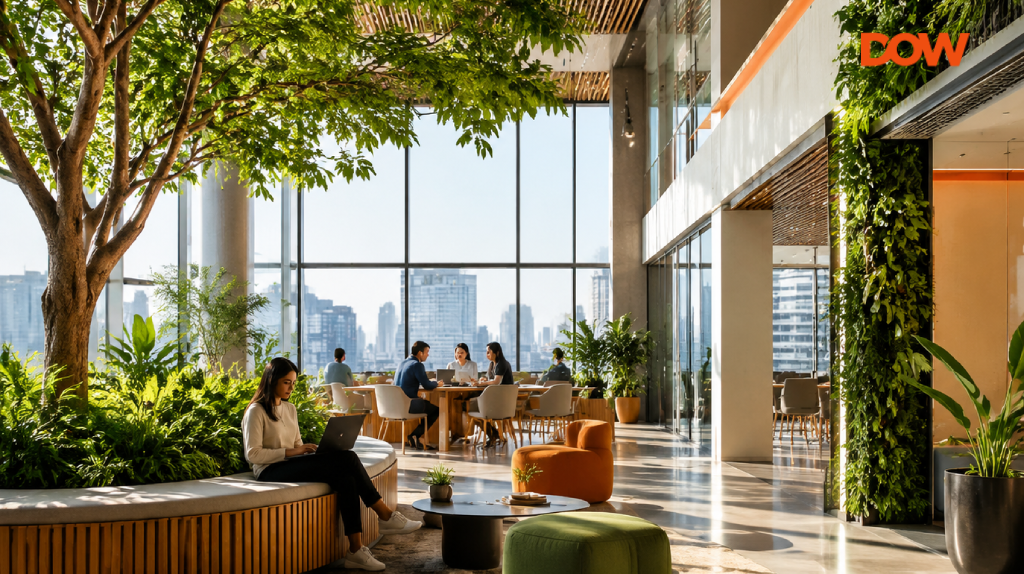
Imagine walking into an office filled with natural light, green plants, warm wooden textures, and open spaces that make you feel connected to nature. The environment feels welcoming, refreshing, and comfortable. This experience is not accidental. It is an example of how thoughtful design can influence the way people feel and interact with a space.
Today, businesses are rethinking how their offices, commercial interiors, and customer-facing environments are designed. Beyond aesthetics and functionality, there is a growing focus on creating spaces that offer meaningful experiences. One approach gaining attention is biophilic design, which brings elements of nature into the built environment.
From corporate offices to retail stores and exhibition spaces, biophilic design is changing how brands create environments that connect with people.
What Is Biophilic Design?
Biophilic design is an approach to architecture and interior design that integrates natural elements into indoor and outdoor environments. It is based on the idea that people benefit from having a connection with nature, even when they are inside buildings.
This connection can be created through natural light, indoor plants, organic materials, water features, natural patterns, and views of outdoor landscapes.
However, biophilic design goes beyond placing a few plants around a room. It involves considering how lighting, materials, textures, layouts, and natural elements work together to create a more comfortable and engaging environment.
The goal is to design spaces that look good, function effectively, and offer a better experience for the people who use them
Natural Light: Creating Brighter Experiences
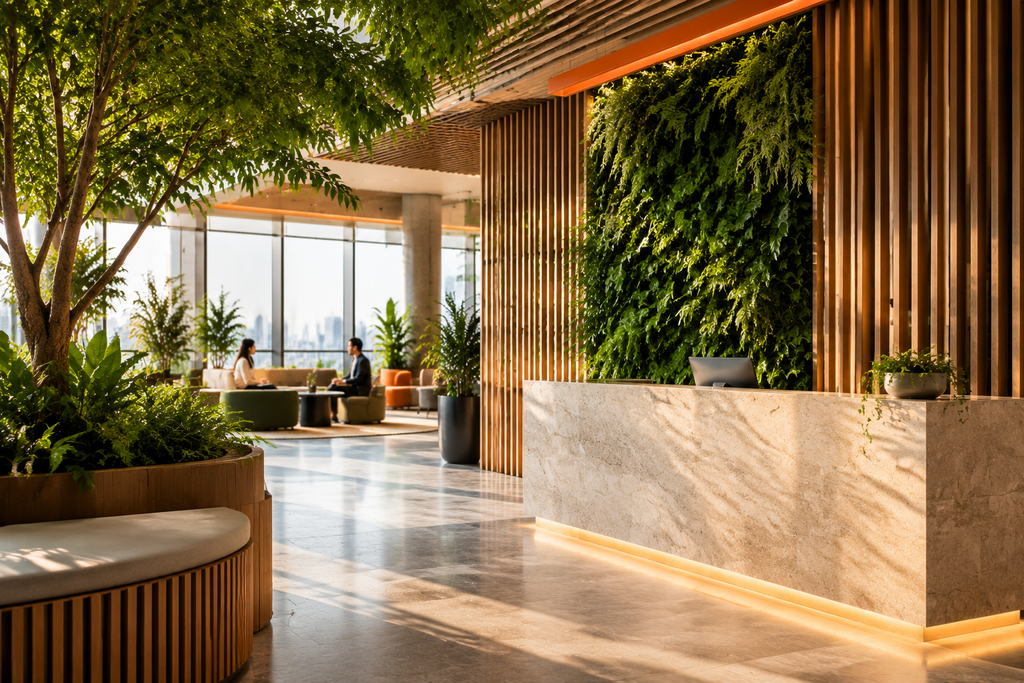
Lighting significantly influences the ambiance of an area. A space with ample natural light can appear more expansive, welcoming, and linked to the outside.
In modern offices, large windows, glass partitions, and thoughtfully positioned workstations can help maximise daylight. Natural light can also highlight architectural details, enhance interior materials, and create visual depth.
Instead of relying entirely on artificial lighting, designers can make natural light an essential part of the planning process. The result is an environment that feels more connected to the changing conditions of the day.
Greenery: Bringing Nature Indoors
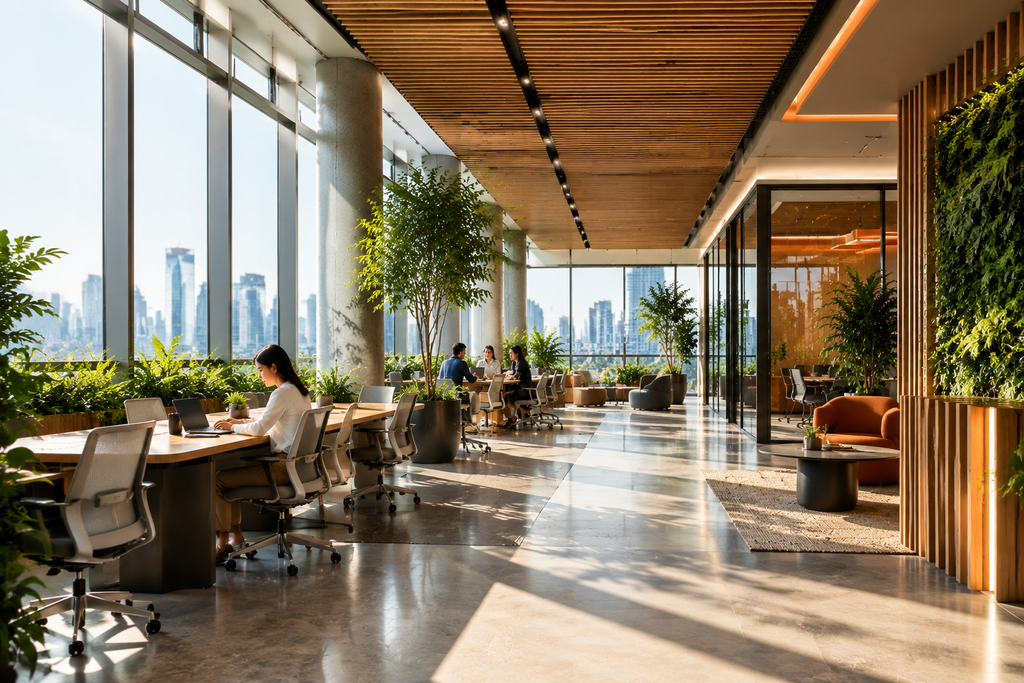
Plants are among the most recognisable elements of biophilic design. From vertical gardens and indoor planters to green walls and landscaped courtyards, greenery introduces natural colour and texture into built environments.
In corporate offices, plants can soften rigid architectural lines and create visual breaks between work areas. In retail environments, greenery can complement product displays and contribute to a distinctive atmosphere.
Exhibition spaces can also benefit from nature-inspired elements. Living walls, carefully positioned plants, and organic forms can make a brand’s exhibition stand feel more inviting and visually interesting.
However, greenery should be integrated thoughtfully. Plant selection, maintenance, available light, and the purpose of the space all need consideration.
Natural Materials: Adding Warmth and Character
Materials influence how people perceive a space. Natural finishes such as wood, stone, bamboo, and cork introduce textures that can make interiors feel warmer and more grounded.
Consider the difference between a reception area dominated by glossy surfaces and one that combines wooden panels, natural stone textures, soft lighting, and greenery. Both may serve the same function, but they can create very different impressions.
Designers can also use nature-inspired patterns, organic shapes, and responsibly selected alternatives where natural materials are impractical.
For commercial interiors, the key is to balance visual appeal with durability, maintenance, and functionality. Material choices should support the purpose of the environment while creating a consistent design language.
Biophilic Design in Modern Workplaces
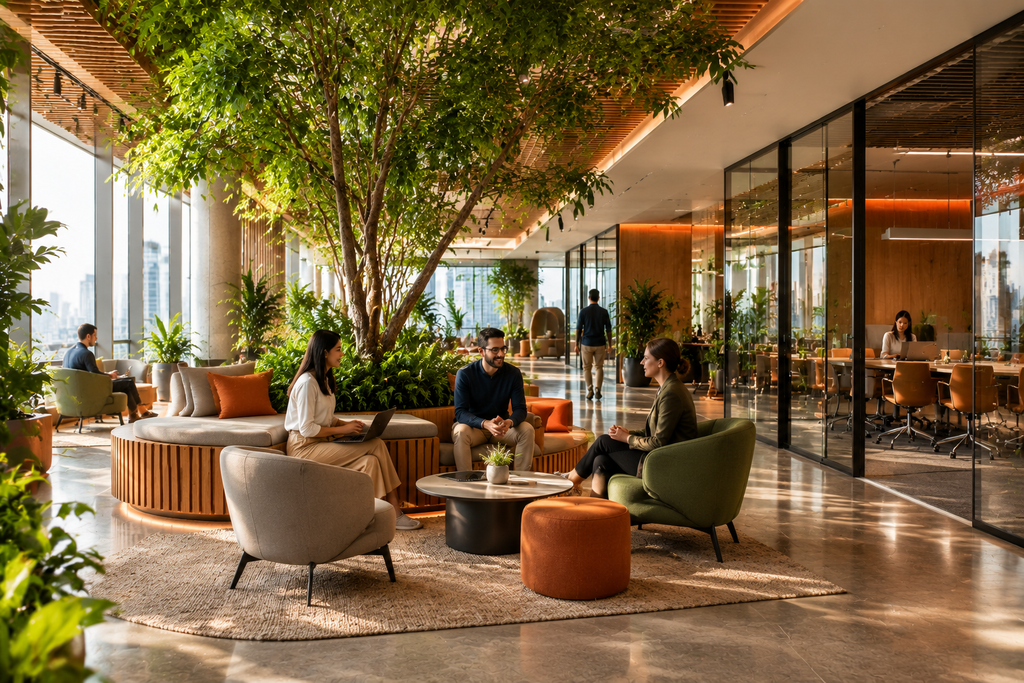
Workplaces are no longer viewed only as places where tasks are completed. They are environments where people collaborate, exchange ideas, solve problems, and spend a significant part of their day.
Biophilic design can enhance these environments by incorporating daylight, outdoor vistas, indoor plants, natural materials, and well-designed breakout spaces.
For instance, an office could include a green relaxation area, a conference room with outdoor scenery, or shared spaces with wooden accents and cozy lighting.
The emphasis must be on developing work environments that harmonize efficiency, practicality, and the experiences of the individuals utilizing them.
Bringing Biophilic Design into Experiential Marketing
Biophilic design also offers opportunities for brands that want to create memorable physical experiences.
At exhibitions, trade shows, and brand activations, the environment plays an important role in attracting visitors and communicating brand values. Nature-inspired structures, sustainable materials, greenery, and organic layouts can help create a distinctive visual identity.
For example, a brand promoting environmentally responsible products could use natural textures, reusable materials, and plant-based visual elements to reinforce its message. A corporate exhibition stand could combine greenery with interactive displays to create a welcoming space for conversations.
The important point is that the design should support the brand story rather than use nature merely as a visual trend.
Conclusion
Biophilic design is changing the way businesses approach offices, commercial interiors, and experiential environments. By integrating natural light, greenery, organic materials, and nature-inspired forms, designers can create spaces that feel more welcoming and connected to the natural world.
For businesses, the opportunity extends beyond creating attractive interiors. It is about designing environments that reflect brand values, support user needs, and encourage meaningful interactions.
As expectations around workplaces and customer experiences continue to evolve, nature is becoming an important part of the design conversation.
Because great design is not just about how a space looks. It is about how people experience it.