Introduction
For a long time, spaces and corporate events were designed primarily around function, aesthetics and execution. An office needed to work efficiently, an event needed to run smoothly, and an interior needed to represent the brand. But a well-designed space or a perfectly executed event does not necessarily create a lasting impression.
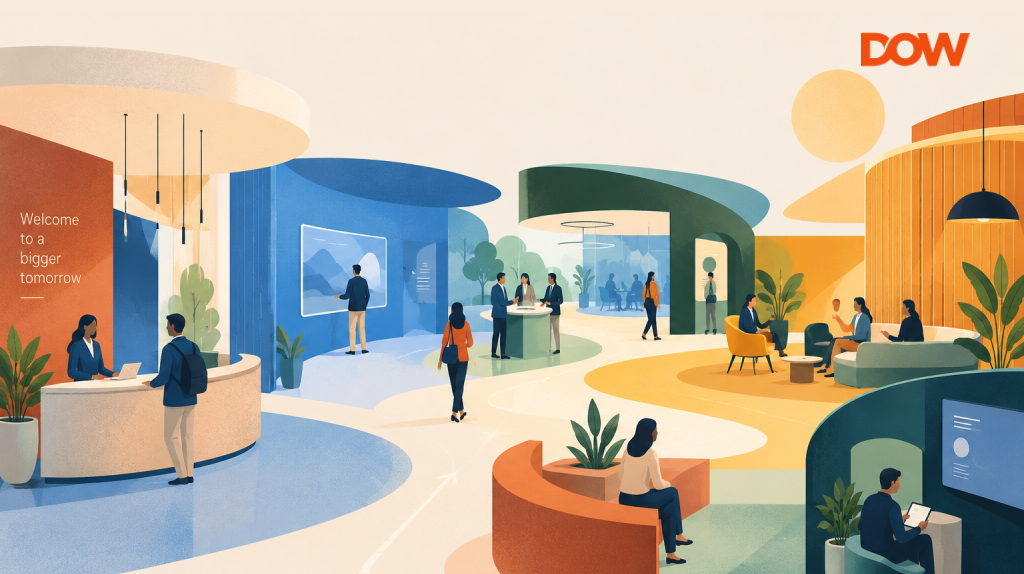
These days, companies are developing experiences in retail areas, corporate events, launches, conferences, offices, brand environments, and hospitality settings. In these situations, people are not simply visitors, employees or attendees; they are continually responding to their surroundings.
This makes the relationship between space, events and human behaviour an important part of contemporary design. The focus, therefore, is moving beyond how a space looks or how an event is executed. It is about understanding what people do within these environments, what catches their attention, what encourages interaction and what stays with them afterwards.
What will people remember when it is over?
For a long time, spaces and corporate events were primarily designed around function. An office needed to work efficiently. A conference needed to run smoothly. An event needed a stage, seating and the right technology. Interiors were judged by how they looked, while events were often judged by how well they were executed.
But expectations have changed.
Today, people interact with brands across a much wider range of physical environments and experiences. They enter offices, attend conferences, visit brand spaces, participate in corporate events, meet clients, explore retail environments and move through hospitality spaces.
In each of these situations, they are not simply using a space or attending an event.
They are experiencing it.
That shift is changing the way environments and events are conceived. Function and aesthetics still matter, but they are no longer the complete story. The focus is increasingly moving towards how people feel, behave, interact and remember within an environment.
The Space Sets the Tone
Before people interact with a brand, they often experience the environment around it. The scale of a room, the lighting, colours, materials, acoustics and overall layout can influence how a place feels even before someone consciously notices these elements.
A corporate office may need to create an atmosphere that supports focus and collaboration, while a client-facing environment may need to feel professional and welcoming. A hospitality space, on the other hand, may focus more on comfort and relaxation.
This is why the visual language of a space needs to work together with its purpose. Design is not simply about selecting attractive finishes or creating an impressive backdrop. It is about creating an environment that feels appropriate to the people using it and the experience the organisation wants to create.
Experience Is Built Through a Series of Moments
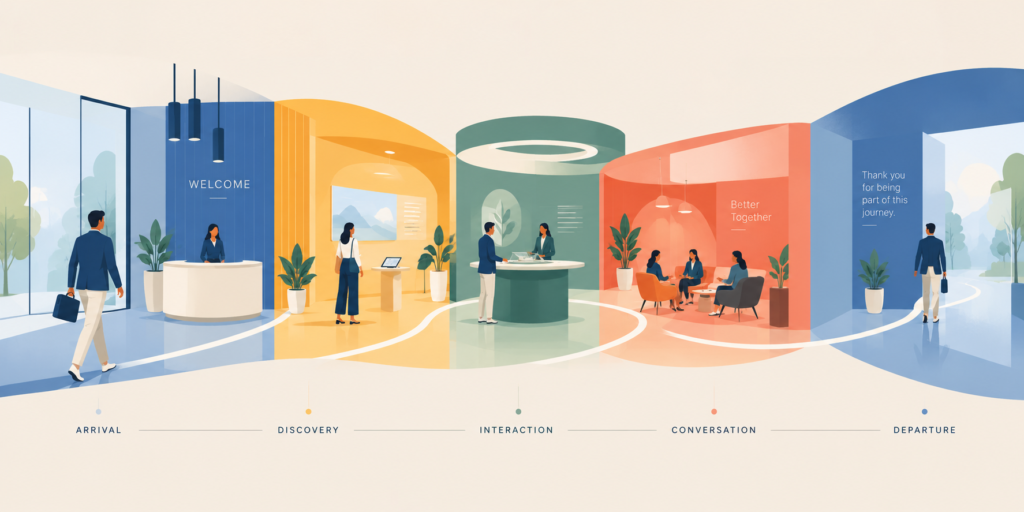
People do not experience a space from a single viewpoint. They experience it gradually as they move through it. They enter, look around, find their way, discover different areas, interact with people and eventually leave. Each of these moments contributes to the overall impression.
The same applies to corporate events. The experience starts well before the main presentation. Arrival, registration, networking, seating, breakout areas and even the transitions between sessions can influence how people perceive the event.
When these different moments are planned as part of one connected experience, the event feels more considered rather than simply being a sequence of activities.
Designing With a Story in Mind
A strong experience often has something to communicate beyond its visual appearance. It may introduce a new product, explain a company’s capabilities, celebrate an achievement or communicate a particular vision.
Instead of presenting all the information at once, design can help unfold that story gradually.
A visitor might first encounter the brand, then discover its work, understand its capabilities and finally interact with a product or idea. At an event, the same approach can shape everything from the opening moment to the main presentation and the conversations that follow.
When design and storytelling work together, the environment becomes a way of communicating rather than simply a backdrop for communication.
Making Experiences More Personal
People do not all respond to an environment in the same way. One visitor may be interested in technology, another may want to speak with a representative, while someone else may simply want to explore at their own pace.
This creates an opportunity to design environments with different ways of engaging.
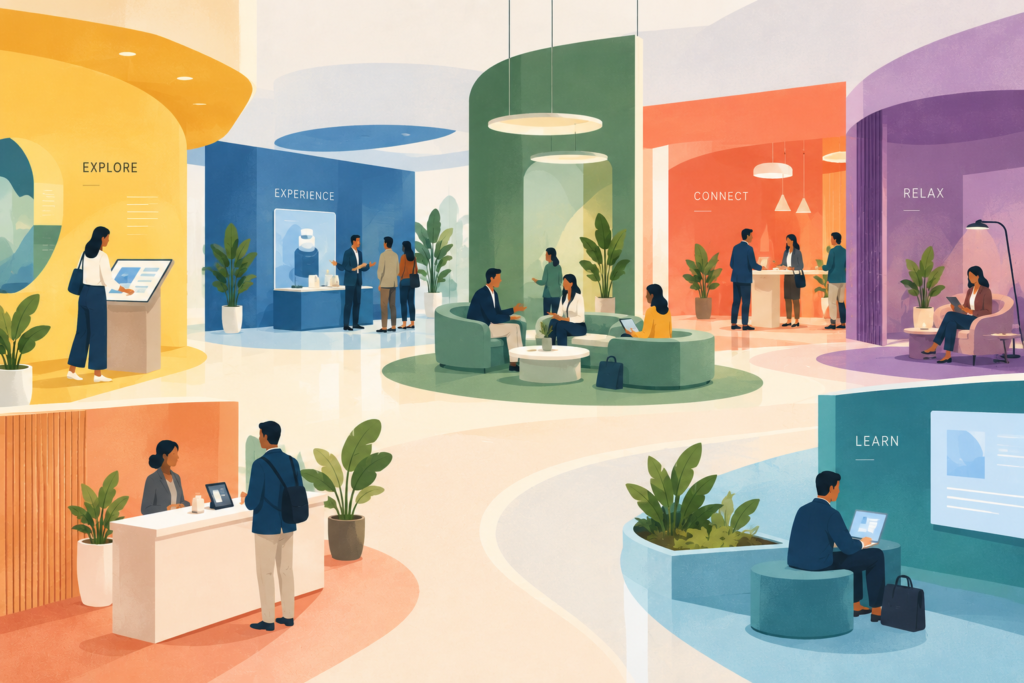
Interactive areas, informal meeting spaces, demonstrations, quiet zones and social areas can provide different levels of participation. Instead of expecting everyone to follow exactly the same journey, the environment can offer choices.
This flexibility can make an experience feel more natural because people can engage with it according to their own interests.
Creating Spaces That Encourage Connection
Some of the most valuable moments in an event or environment happen between the planned activities.
A conversation over coffee. An unexpected introduction. A discussion after a presentation. A client meeting that continues in an informal setting.
Design can create the conditions for these moments to happen.
Instead of filling every available area with displays or information, spaces can also provide room for people to pause, meet and communicate. In this way, the environment becomes a facilitator of human connection rather than simply a container for activities.
When Experience Meets Business
Experiential design is not simply about creating something attractive or memorable for its own sake. There is usually a business objective behind the experience.
An event may be intended to build relationships. A brand environment may need to communicate expertise. A workplace may support collaboration and culture. A customer space may help people understand a product or service.
The challenge is to connect these objectives with the physical experience.
When the business purpose and the experience are aligned, design becomes more than decoration. It becomes a tool for communication, engagement and relationship building.
The Future Is Not One Type of Space
The boundaries between events, interiors, brand environments and digital experiences are becoming less defined.
An office can function as a brand experience. An event can temporarily transform a space. A showroom can become an interactive environment. A conference can extend beyond the venue through digital participation.
This means the future of experiential design is unlikely to belong to one specific format.
Instead, it will be about creating connected experiences wherever people encounter a business.
Designing What Comes After the Experience
The most valuable physical experiences do not necessarily end when people walk out of the door.
A successful event can lead to a new conversation. A brand environment can change how someone understands a company. A workplace can influence how employees connect with their organisation. A memorable interaction can become something people talk about later.
That is the real opportunity in designing around people.
The objective is not simply to create a space that looks impressive or an event that runs smoothly. It is to create something that has a purpose beyond the physical environment itself.
Because when the lights go off, the event ends and the space is left behind, the experience can continue through the conversations, impressions and memories people carry with them.