Introduction
Walk into any exhibition and you will see hundreds of stalls competing for attention. Large graphics, LED screens, striking structures, premium finishes and innovative installations fill the venue. But amidst all this visual competition, one question matters more than how impressive a stall looks:
An attractive stall might draw attention, but a successful exhibition area ought to accomplish much more. It should attract the appropriate audience, swiftly convey the brand, promote dialog, properly display products, and eventually help achieve business goals.
At this point, exhibition design transcends aesthetics and turns into a useful business tool.
The Real Problem Is Not “How Should the Stall Look?
Exhibition projects frequently start with a straightforward brief, such as “We need an attractive stall.”
However, that is just the beginning. The following are the main crucial questions:
Who should come to the booth? In the initial few seconds, what should visitors comprehend?
Which goods or services require the greatest care?
What kinds of discussions are desired by the sales team?
How should guests navigate the area?
Above all, what does success look like following the exhibition?
Prior to choosing colors, materials, and structures, a strategic display design provides solutions to these queries.
Solving the Visibility Problem
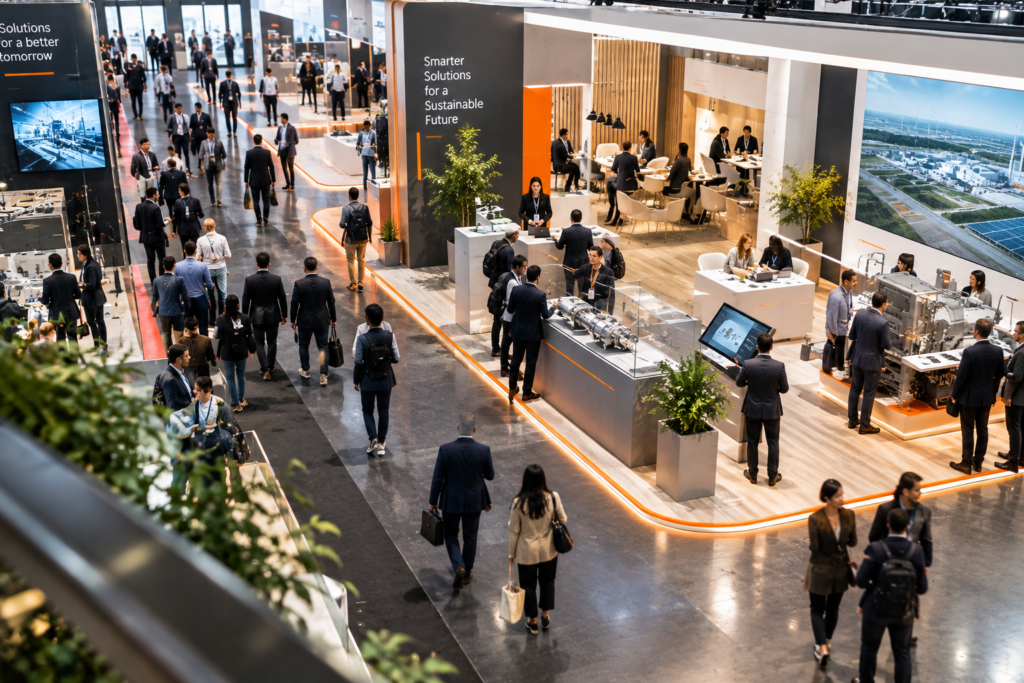
Being present is insufficient at a busy exhibition. A brand must be seen. This is where visibility, one of the most significant display issues, may be resolved through design. A powerful visual presence can be produced by combining the stall’s architecture, height, branding, lighting, graphics, and open spaces.
But increasing visibility shouldn’t entail adding more and more components. Visual noise can be produced by an excessive number of messages, visuals, or structures.
A clear visual hierarchy is produced by effective design so that users can easily recognize: who you are. what you provide. Why it is important. A wall of information is frequently less effective than a well-positioned brand identity and a targeted marketing plan.
Creating Meaningful Engagement with Foot traffic
Only half of the work is getting customers inside the stand. Engagement is the next obstacle. People’s experiences and how they navigate a space can be influenced by exhibition design.
The stall may be more approachable if the entryway is open. Natural halting locations can be created by product displays. Interaction can be promoted by demonstration spaces. Meeting rooms can offer seclusion for important business discussions.
The objective is to create an environment that directs guests toward meaningful encounters rather than just creating a room that looks stunning from the aisle. The physical trip is incorporated into the marketing plan.
Communicating Complex Products Simply
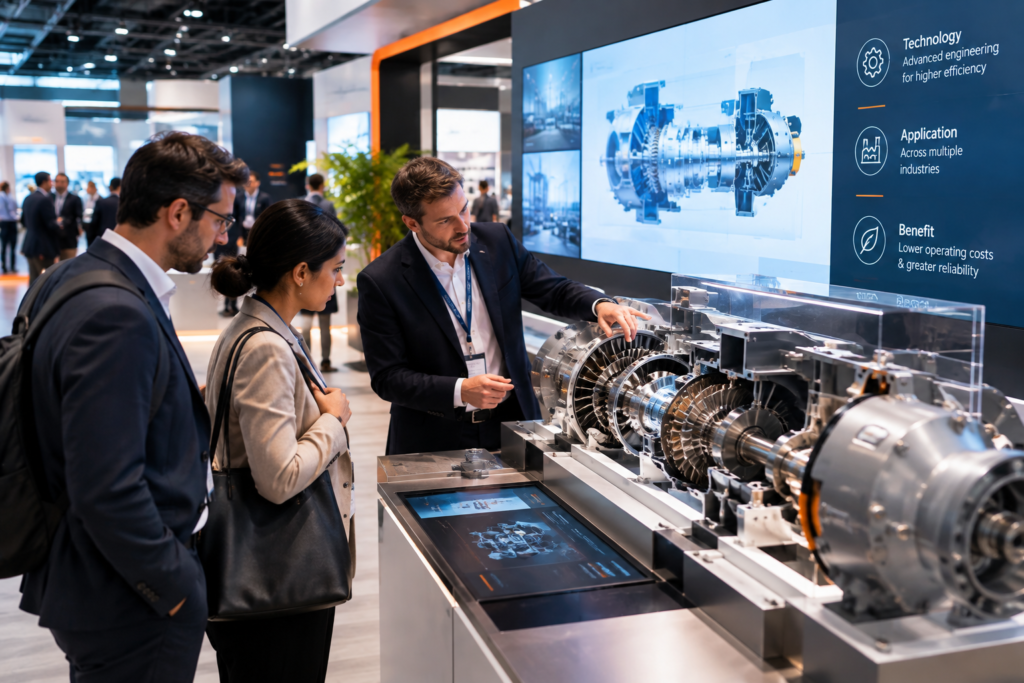
Industries including medicines, engineering, manufacturing, technology, and industrial equipment are represented at several B2B events. These companies frequently offer sophisticated goods and technical solutions that are difficult to sum up in a headline.
This leads to an additional business issue:
How can you convey diversity to a visitor without making them feel overwhelmed?
Visual narrative in exhibition design can help with this.
Information can be arranged into distinct sectionsproblem, solution, technology, application, and benefit instead of showing every specification.
A communication trip can be created by combining large-format visuals, product displays, digital screens, diagrams, and demonstrations. Showing everything is not the goal. It is to assist guests in comprehending what is most important.
Designing for the Sales Team
An exhibition stall serves more purposes than just marketing.
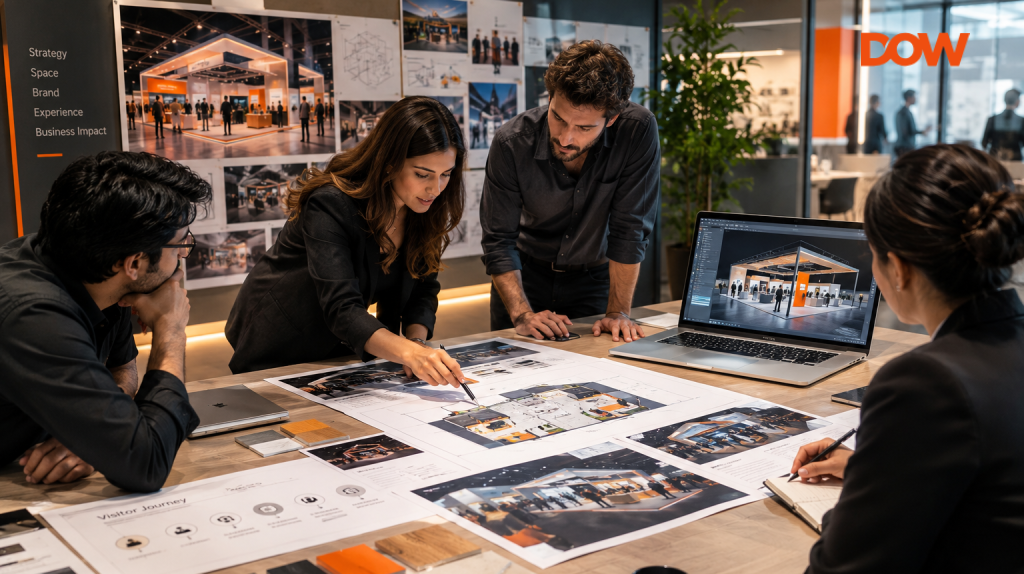
The sales team works there as well. Inadequate planning can lead to real-world issues like crammed meeting spaces, challenging product demos, inadequate storage, low visibility between employees and guests, or a dearth of private conversation spaces.
These needs are taken into account from the start in strategic display design. The layout of meeting spaces, discussion tables, product zones, reception areas, and storage is based on how the team really works.
The end product is a stall that functions effectively in addition to having a nice appearance.
From Visitors to Leads
The ultimate value of an exhibition is rarely measured by the number of people who walked past the stall. Businesses want meaningful conversations, qualified leads and opportunities.
Design can support this conversion journey.
A visitor may first notice the brand from the aisle. The stall architecture encourages them to enter. A product display creates interest. A demonstration explains the solution. A meeting area enables deeper discussion. Every stage has a purpose.
In this way, exhibition design becomes similar to a physical marketing funnel:
Attract → Engage → Inform → Interact → Convert
The stall becomes more than a structure. It becomes a carefully designed customer journey.
Measuring Exhibition Design by Business Impact
A successful exhibition should be evaluated beyond photographs and compliments.
Businesses can look at measurable outcomes:
- Number of relevant visitors
- Quality of leads generated
- Product demonstrations conducted
- Meetings completed
- Enquiries received
- Visitor engagement
- Post-event conversions
- Brand recall
These metrics help businesses understand whether their exhibition investment delivered meaningful value.
The question changes from:
“Did people like our stall?”
to:
“Did our stall help us achieve our business objectives?”
The Future of Exhibition Design
Building larger stalls just to get attention is not the way of the future for exhibition design. It is about creating more intelligent experiences.
The best exhibition venues mix technology, architecture, branding, communication, and visitor psychology to address particular business issues. Every component, including the meeting space, product display, fascia, and entry, should have a purpose.
Because the most popular display stand isn’t always the greatest. It is the one that turns interest into understanding, understanding into conversation, and conversation into business opportunity.
Conclusion
Exhibition design has moved far beyond creating impressive structures.
Today, a stall must work as a brand experience, communication platform, customer journey and business environment all at the same time.
Aesthetics may attract the visitor. But strategy gives the visitor a reason to stay. And when every square metre of an exhibition space is designed with a clear business purpose, the stall stops being just a display and starts becoming a powerful tool for business growth.