

Introduction
In a world where consumers are constantly surrounded by advertisements, digital content, simply being seen is no longer enough. Experiences that consumers can relate to remember, feel and connect with.
While visuals remain an important part of any brand experiences or marketing experiences.. Sound, scent and texture can all have a vital impact on how consumers perceive location, interact with a brand and recall their experiences.
These sensory components can turn a routine interaction into a memorable brand moment when carefully incorporated into exhibitions.
Moving Beyond Visual Branding
Most brand experiences are designed around what audiences see … logo, colour, graphics, videos, display and installations. But human perception goes far beyond sight..
Sounds can create an atmosphere.
Scent can trigger memories
Texture can encourage physical experiences.
When combined these components appeal to a variety of sense and enhance the immersion of a brand experience
Eg. Imagine walking into a pharmaceutical exhibition booth. The branding, product displays and scientific visuals immediately establish the brand identity.
But imagine the experience also includes a carefully designed ambient soundscape, a subtle clean and refreshing scent, and interactive product displays that allow visitors to explore packaging, materials and formulations firsthand.
The experience becomes more than something you look at. It becomes something you experience.
The Power of Sound
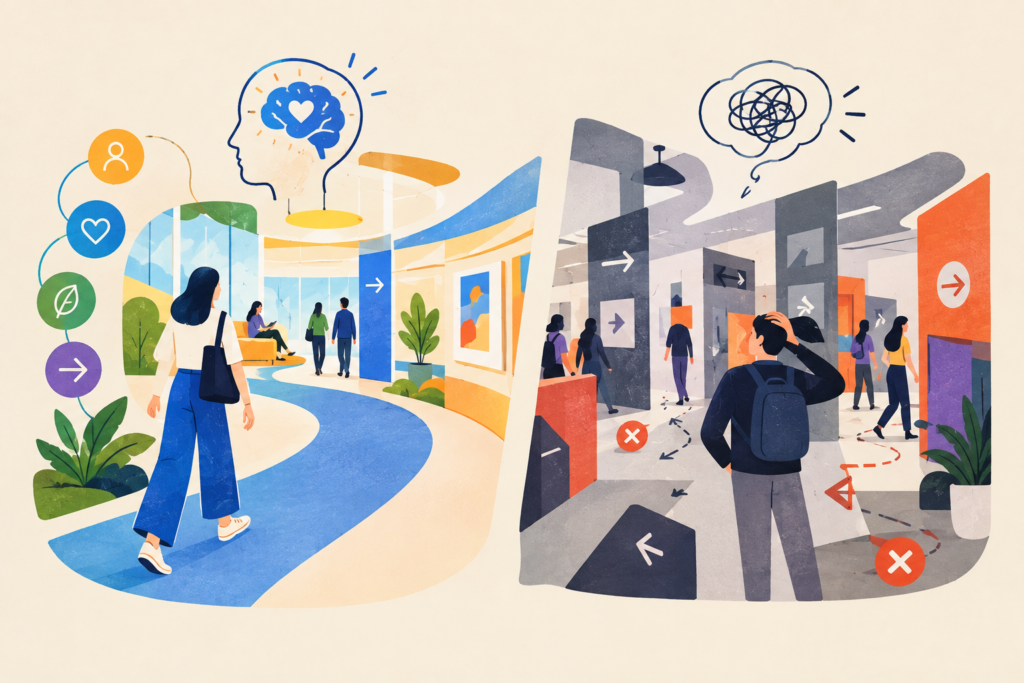
Sound has a remarkable ability to influence mood and energy. A carefully selected atmosphere can be made to feel thrilling, sophisticated, lively or calming.
For instance music at an exhibition can affect the mood and tempo of the entire booth. While a luxury business can employ delicate, sophisticated music to convey exclusivity an enthusiastic brand might utilize powerful sound to generate enthusiasm.
Sound can also become part of a brand’s identity.
Think of a familiar notification sound, or signature audio cue. Sometimes audiences can identify a brand just by hearing it. This idea can be applied to more than just music in experiential marketing. Voiceovers, interactive audio, ambient sound and branded sonic elements can all contribute to storytelling.
Minimalism is the key. Instead of overpowering talks or competing with the surroundings, sound should improve the experience.
Aroma: The Unnoticeable Brand Mark
Scent is one of the senses that is most strongly associated with memory and emotion. Someone can be immediately reminded of a location, time, or event by a particular scent. Scent is therefore an intriguing tool for authentic brand surroundings.
Scent can also assist create a mood during an event or exhibition. A premium lifestyle company might utilize an elegant distinctive aroma, while a health brand might use comforting, fresh scents.
Scent, however, needs to be carefully considered. Strong scents can be distracting, and different visitors can react to fragrances differently. The goal should be to produce a subtle sensory layer that enhances the brand surroundings rather than making the fragrance overt.
Brands Become Tangible Through Texture
Without using a single word, several brand attributes can be communicated through smooth metal, natural wood, textured paper, soft fabrics, glass, leather, or inventive materials. Because texture promotes physical contact, it adds another crucial element to experiential branding.
In exhibitions, when viewers are physically moving across a room, texture is very potent. Sleek, well-designed surfaces could be used by a technology business to convey innovation.
To strengthen its environmental positioning, a sustainable business could use natural fibers, recycled materials, or unpolished textures. This creates a stronger connection between the audience and the brand.
Creating Multi-Sensory Experiences

The true opportunity is in combining sound, aroma, and texture into a cohesive whole rather than utilizing them separately.
Imagine walking into a product launch setting where the brand’s identity is established by the lighting and images, the ambiance is created by a faint characteristic aroma, a carefully planned soundscape stimulates anticipation, and interactive materials urge guests to investigate the product.
The same narrative is supported by each sensory component. A multi-sensory brand experience is strong since the audience isn’t only getting information. They are seeing the brand through several touchpoints concurrently.
Why Sensory Experiences Are More Memorable
Every day, people are exposed to a plethora of brand messages. A multisensory experience can leave a far more lasting impression than a visual commercial, which might only hold viewers’ attention for a few seconds.
Brands can benefit from sensory experiences:
Develop closer emotional ties
Increase the immersion of physical spaces
Set themselves out from rivals
Promote audience participation
Boost the remember of your brand
Transform routine interactions into unforgettable experiences
For exhibitions and events, this can be particularly valuable. Visitors may attend dozens of booths or interact with numerous brands in a single day. A thoughtfully designed sensory experience gives them another reason to remember one brand over another.
Conclusion
Every sensory element in experiential branding is a chance to convey a brand’s values. Texture may make the experience tangible, sound can establish the tone, and aroma can evoke strong feelings. These components produce experiences that feel more genuine, captivating, and unforgettable when combined with powerful visual storytelling.
Creating visually striking venues is not the only aspect of branding in the future. The goal is to create experiences that people can see, hear, touch, feel, and recall in order to engage with them on a deeper level. Because a brand has a much higher chance of remaining with the audience long after the moment is finished when it transforms into an experience rather than merely a message.