Introduction
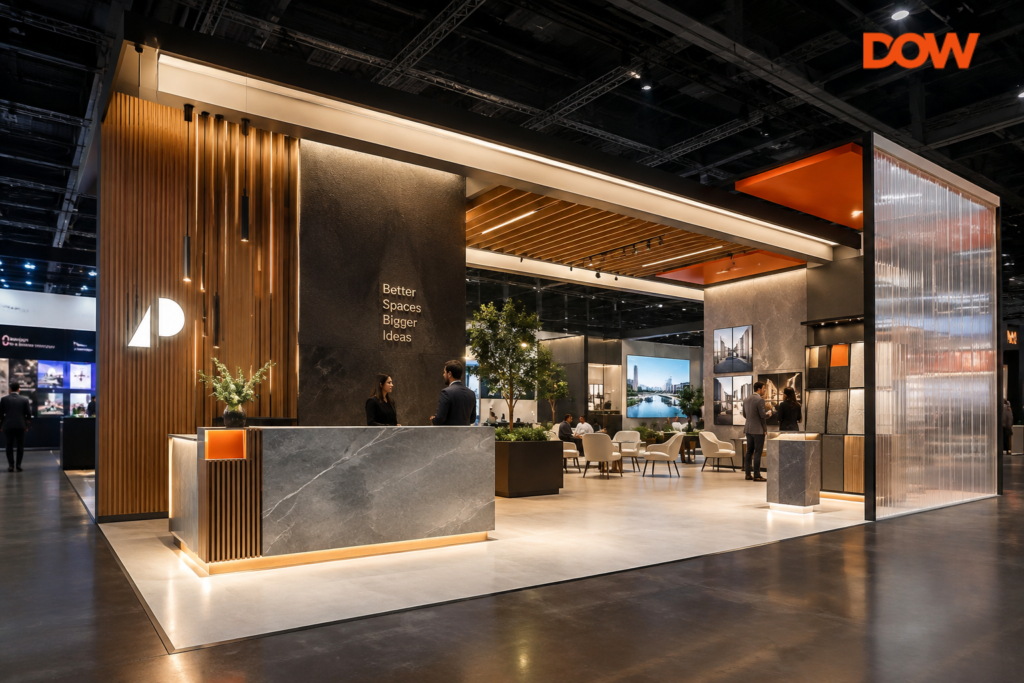
Two exhibition stalls can use similar colours, layouts and visual identities, yet create completely different impressions. One may feel premium and sophisticated, while the other may feel simple and ordinary. A major reason behind this difference is often the materials used to build and finish the stall.
The choice of materials affects more than just construction or aesthetics. It plays an important role in how a brand’s personality and value are communicated at an exhibition. From the structural framework and wall panels to the reception counter, flooring and branding elements, every material contributes to the overall experience.
Plywood: The Foundation of a Solid Stall
One of the materials most frequently utilized in the construction of show stalls is plywood. Walls, counters, storage units, platforms, and display structures can all benefit from its strength and stability.
A welcome counter constructed from properly finished plywood, for instance, may feel more substantial than a temporary, lightweight structure. Additionally, plywood makes a wonderful foundation for various treatments like vinyl, paint, laminate, and veneer.
The grade, thickness, quantity, manufacture, and finishing all affect the price. Reception counters, product displays, and meeting tables are examples of spaces where using high-grade plywood can enhance perceived quality and longevity.
Plywood & MDF: Building the Visible Structure
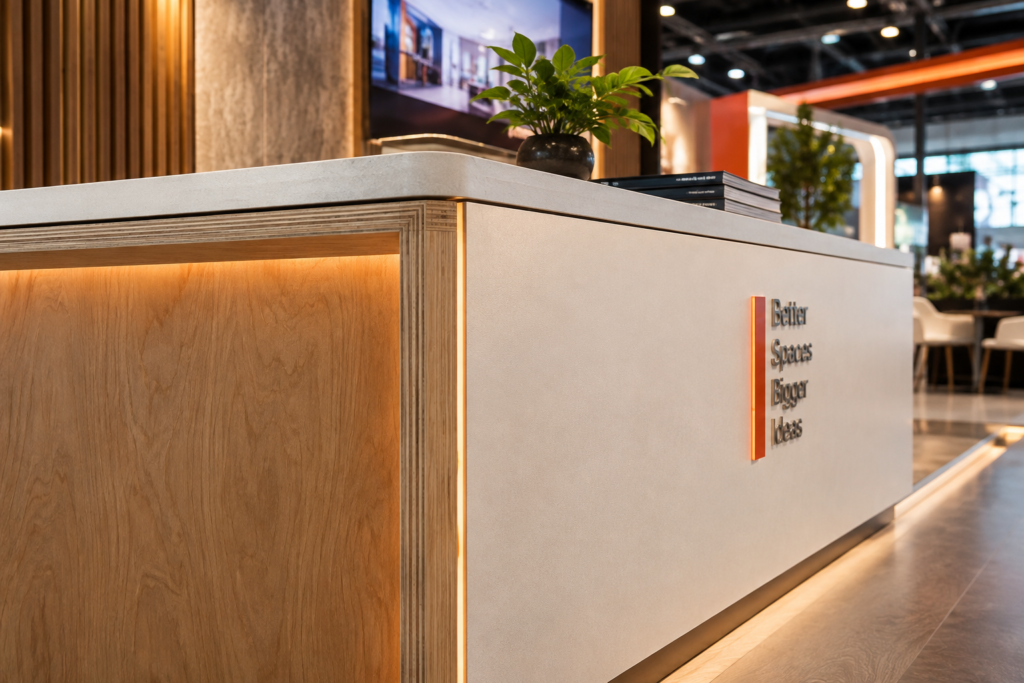
Walls, reception counters, storage units, furniture, exhibition platforms, and product showcases are common uses for plywood and MDF.
MDF is frequently utilized for smooth, detailed, and painted surfaces, but plywood is typically selected when more strength is needed. The design, application, weight restrictions, and financial constraints all influence which option is best.
A reception counter constructed with high-quality laminate and carefully finished plywood, for instance, can seem significantly more substantial than a simple temporary counter. The perception of quality is influenced by the material itself, but fabrication and finishing also play a significant role in the finished product.
Sunboard: Lightweight Branding
Sunboard is frequently utilized for ornamental elements, lightweight panels, graphics, and signage. Because it is lightweight, it can be used in situations where a significant visual impact is needed without adding a lot of structural weight.
For example, a brand can mount large-format graphics or directional signage on a sunboard instead of creating a heavier fabricated element. This can help control transportation, installation and material costs.
Sunboard might not convey luxury on its own, but it can help create a tidy and polished stall presentation when paired with excellent graphic design, printing, and placement.
Laminates: When Design and Cost-Effectiveness Collide
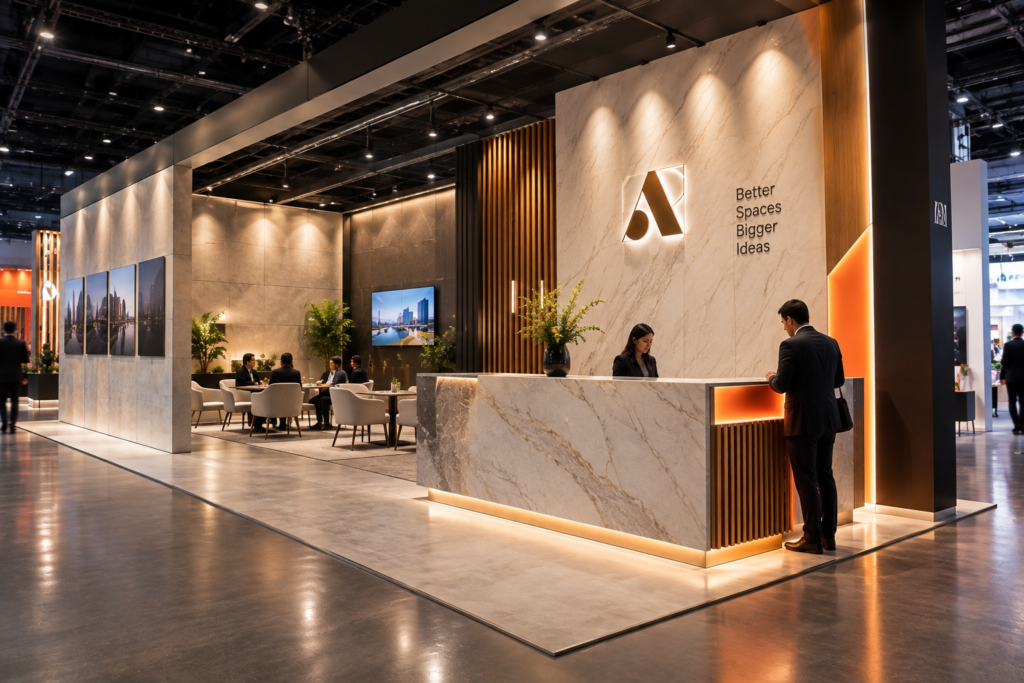
Although laminate is frequently thought of as an inexpensive material, contemporary laminates can have an unexpectedly high-end appearance.
Laminate can dramatically change the appearance of a basic fabricated structure.
Available in wood, marble, stone, metallic, fabric and solid-colour finishes, laminates allow brands to create different visual personalities without completely changing the underlying construction.
For instance, let’s say a company needs a reception wall that resembles marble. Designers might utilize a premium marble-finish laminate for the wall and use real marble only on the reception counter rather than covering the entire wall with pricey natural marble.
As a result, a material hierarchy is established.
Cost-effective materials are used throughout broader background regions, while premium content is positioned where visitors are most likely to notice or interact with it.
Acrylic: Making the Brand Stand Out
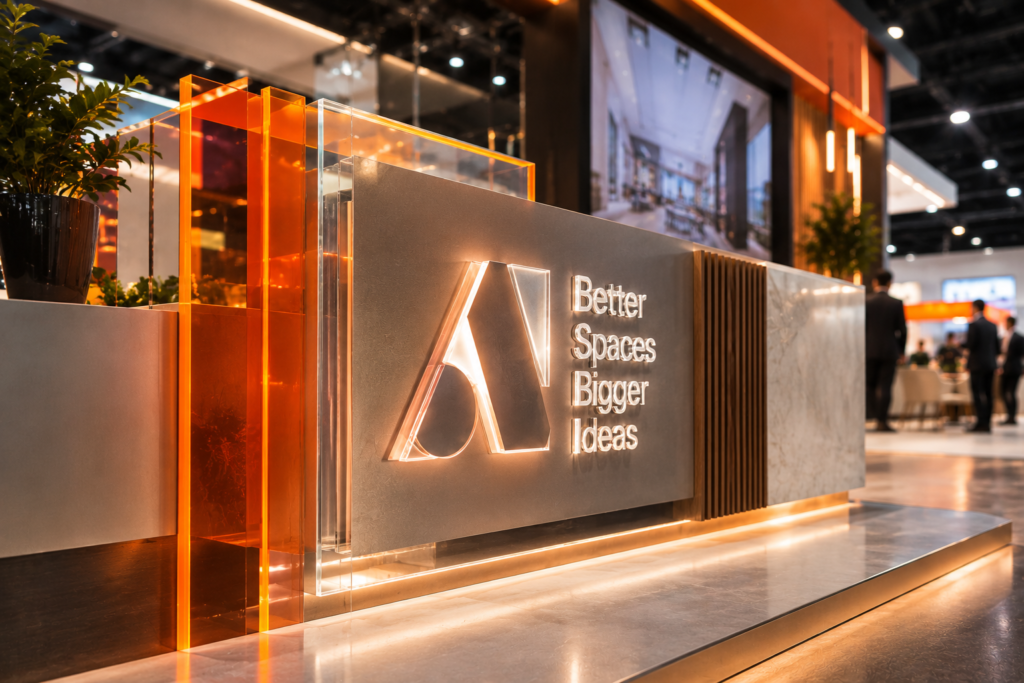
Logos, lettering, illuminated signage, display pieces, and decorative features are often made of acrylic.
Compare a welcome counter with integrated lights and layered acrylic letters to one with a straightforward printed brand. The second treatment can strengthen the focus point even though the underlying structure may be the same.
Acrylic that is transparent, frosted, colored, and backlit can all produce various effects. Because acrylic is typically used sparingly, companies may add elements that look high-end without utilizing a lot of the material.
Soft Materials and Fabric: Increasing Comfort
Choosing materials is about more than just luxury. It also affects how welcoming and cozy a room feels. Carpets, upholstered furniture, fabric wall panels, and acoustic materials can all soften an otherwise harsh setting.
For instance, a conference room composed only of metal, glass, and hard surfaces may seem extremely technical. The same space can feel cozier and more comfortable by adding wooden surfaces, cushioned chairs, and acoustic fabric panels.
Expensive Material Doesn’t Always Equate to Expensive Appearance
A common misconception is that using expensive materials automatically makes a stall look premium.
In actuality, workmanship, lighting, proportion, detailing, and material choice all collaborate. Simultaneously, when each material is used correctly, a combination of MS pipe, plywood, MDF, laminate, sunboard, and acrylic can provide a stylish stall.
It is produced by:
Material + Lighting + Detailing + Proportion + Craftsmanship + Context
For this reason, rather than being viewed as a final choice, material selection should be taken into account in the early phases of brand and spatial design.
Building a Smart Material Budget
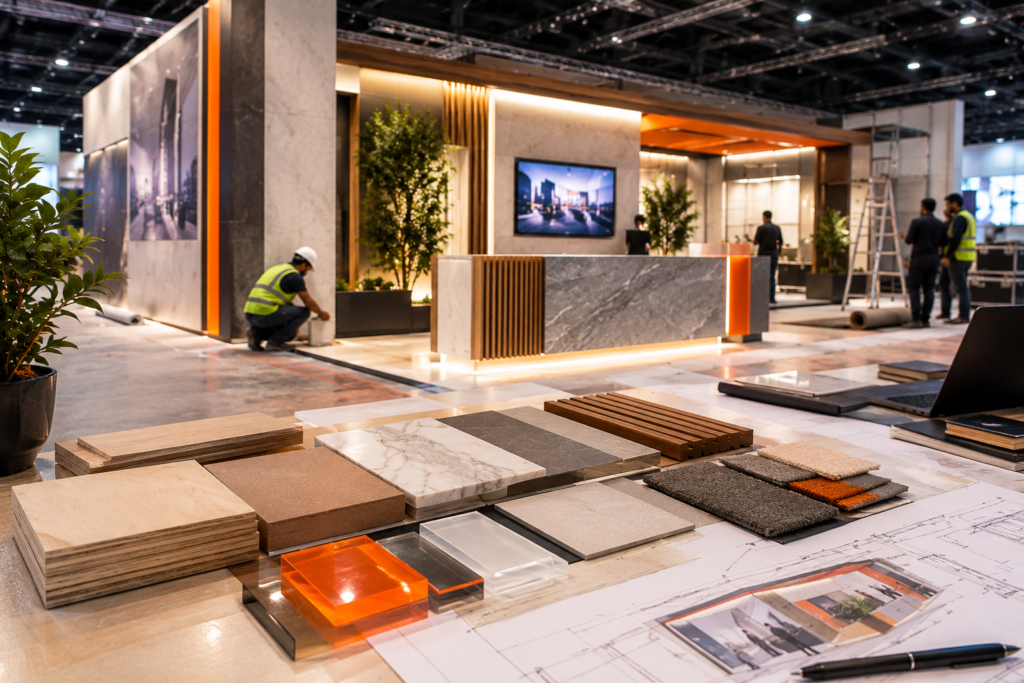
A practical approach is to divide materials into three categories.
Hero Materials
These are used in high-visibility areas such as reception counters, feature walls, product displays and important customer touchpoints.
Examples include natural marble, premium wood, brass, specialty glass and high-end finishes.
Supporting Materials
These create consistency throughout the space.
Examples include laminates, engineered wood, standard glass, painted surfaces and regular flooring.
Functional Materials
These are selected primarily for durability, maintenance and performance.
Useful Materials
These are chosen mostly for their performance, longevity, and upkeep.
Although they might not be the most eye-catching materials, they contribute to the project’s practicality and affordability.
Instead of spending the same amount everyplace, this strategy enables marketers to make significant investments where people truly engage with the location.
Conclusion
An exhibition stall has only a few seconds to make an impression, and every material contributes to that impression. From the framework to the finish of a reception counter, the choice of plywood, laminate, acrylic, glass, fabric and other materials influences how the stall and ultimately the brand is perceived.
The goal is not to make every element expensive. It is to allocate the right materials to the right touchpoints. A well-planned combination of structural, functional and premium finishes can create a stall that looks distinctive, feels well-crafted and communicates the value of the brand.
Because at an exhibition, material selection is not just about what the stall is made of it is about what the stall makes people feel about the brand.