Introduction
Planning an exhibition stall involves much more than choosing colours and placing graphics. Every decision from layout and visitor flow to lighting, branding, and even the placement of seating or product displays plays a role in shaping how successfully your business presents itself at an exhibition.
A well-thought-out stall doesn’t just look good; it guides visitors naturally through the space, highlights key products or messages, and leaves a lasting impression that can translate into real business opportunities. Even small details, like the height of a signage board or the angle of a light fixture, can influence whether a visitor stops to engage or simply walks past. That’s why exhibition planning today demands a far more strategic and detailed approach than it used to.
3D Exhibition Design: What Is It?
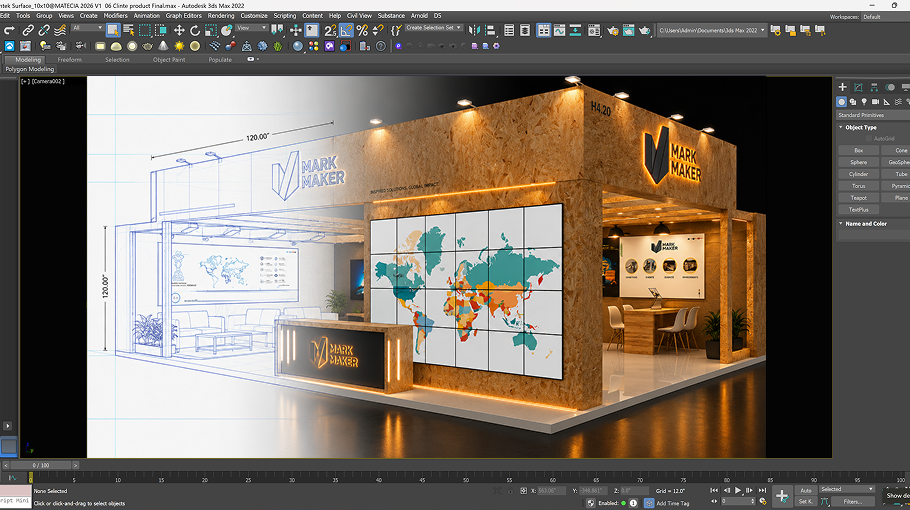
A 3D display design is a graphical model of your show stand created before manufacture. It allows businesses to see the intended stand from every angle, understand the design, and see how the final booth will look.
A 3D model, in contrast to conventional 2D drawings, offers dimensions, scale, textures, lighting effects, and realistic branding placement, making it far simpler to assess the design prior to manufacture. It ensures that everyone engaged has the same vision by serving as a link between concept and implementation.
Visualize the Final Stall Before It’s Built
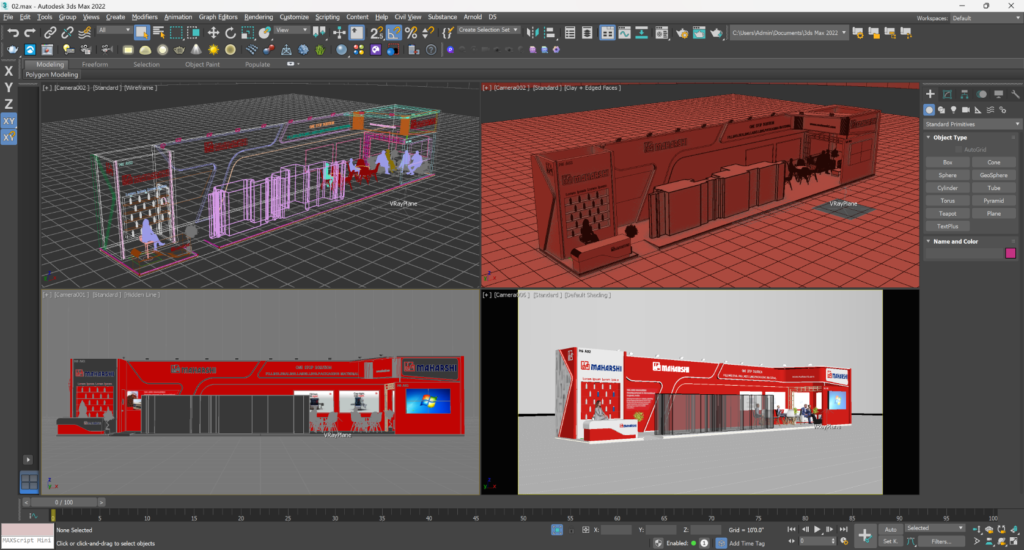
One of the biggest challenges during exhibition planning is imagining how a design will look in reality. Floor plans and sketches can only communicate so much, often leaving businesses to fill in the gaps with guesswork.
A 3D design solves this by giving stakeholders a clear, realistic preview of the exhibition stand covering overall appearance, branding visibility, product display locations, reception areas, meeting spaces, and visitor pathways. With this level of clarity, teams can make informed decisions before construction even begins.
Reduce Costly Design Changes
Changes become expensive once fabrication has started. A misplaced counter, incorrect wall height, or poor product placement may require rebuilding sections of the stand, increasing both costs and project timelines.
With a detailed 3D design, these issues are identified much earlier. Clients can review every element, request modifications, and approve the final design before production begins. This significantly reduces rework and unnecessary expenses.
Improve Space Utilization
Exhibition spaces frequently have set proportions, which makes efficient planning essential. By strategically placing product displays, interactive zones, seating areas, storage spaces, walkways, and branding elements.
Designers can improve visitor comfort and engagement by creating an open, well-organized, and user-friendly layout instead of packing the booth to capacity.
Enhance Visitor Experience
An attractive booth may draw attention, but a thoughtfully planned booth encourages visitors to stay longer. Using 3D visualization, designers can study how people are likely to move through the space and adjust the layout accordingly. This helps create:
- Clear entry points
- Comfortable meeting areas
- Better product accessibility
- Logical visitor flow
- Reduced congestion
Experiment with Multiple Design Concepts
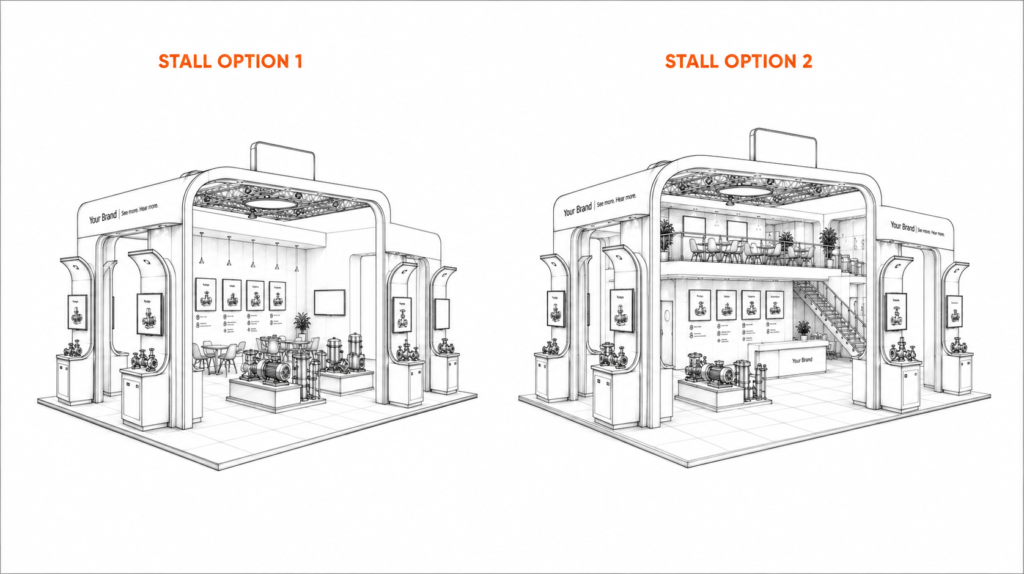
Before finalizing a stall, businesses often want to explore different creative directions rather than committing to the first idea that comes up. 3D design makes this easy by allowing you to compare multiple concepts side by side without physically building anything. You can experiment with:
- Different colour schemes
- Graphic placements
- Booth layouts
- Lighting concepts
- Furniture arrangements
- Display structures
Plan Lighting More Effectively
Lighting plays a major role in attracting visitors and highlighting products. Designers can discover dark areas, product highlights, branding visibility, accent lighting options, and reception illumination by simulating lighting circumstances using a 3D display model before installation
On the event floor, a well-planned lighting design guarantees that the exhibition stand seems professional and welcoming.
Building Assurance Before You Build the Stand
Seeing the entire design in advance offers businesses the assurance that every component meets their expectations because fabricating an exhibition booth requires a substantial expenditure.
Clients don’t have to worry about how the booth will seem after installation because they know exactly what they’re approving, which facilitates a more seamless transfer from design to production and reduces on-site surprises.
Conclusion
Successful exhibitions begin long before the event opens. They start with careful planning, collaboration, and smart design decisions. By using 3D exhibition design, businesses can visualize ideas, optimize every inch of available space, avoid costly mistakes, and ensure their exhibition stand performs as intended. Whether you’re preparing for your first exhibition or managing a large-scale trade show presence, investing time in 3D planning can lead to a smoother execution and a more impactful exhibition experience.