Introduction
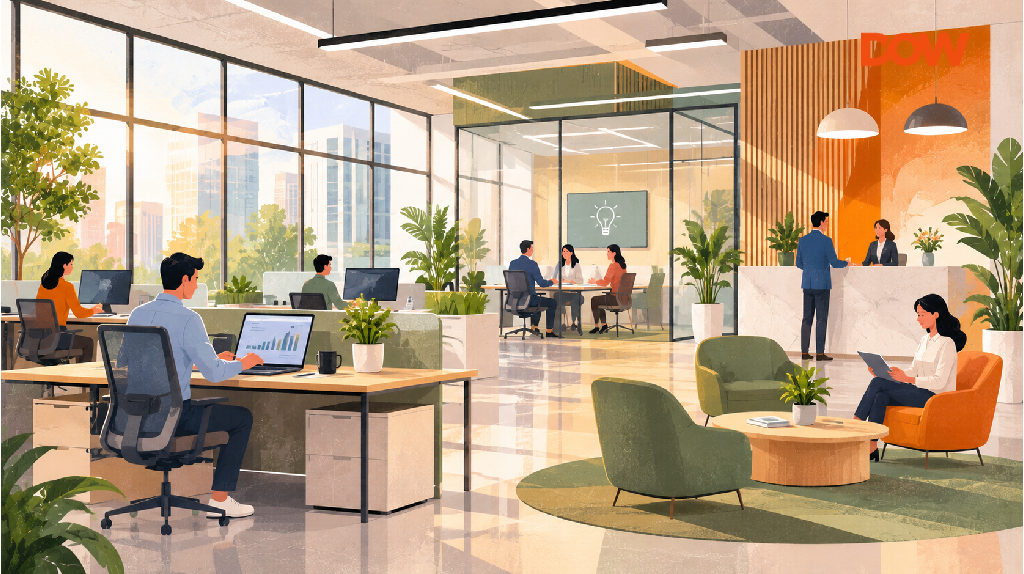
An office is more than a place where people come to work. It is an environment that influences how they think, feel, interact and perform throughout the day. While technology, business strategy and company culture often receive the most attention, the physical workspace quietly shapes the everyday employee experience.
A well-designed office does not necessarily require expensive furniture, dramatic architecture or elaborate decoration. Sometimes, the difference lies in much smaller decisions, such as the position of a desk, the colour of a wall, the comfort of a chair, the quality of natural light or the distance between two workstations.
These details may seem insignificant individually, but together, they can transform an ordinary workplace into a more comfortable, functional and welcoming environment.
Natural Light: More Than Just Brightness
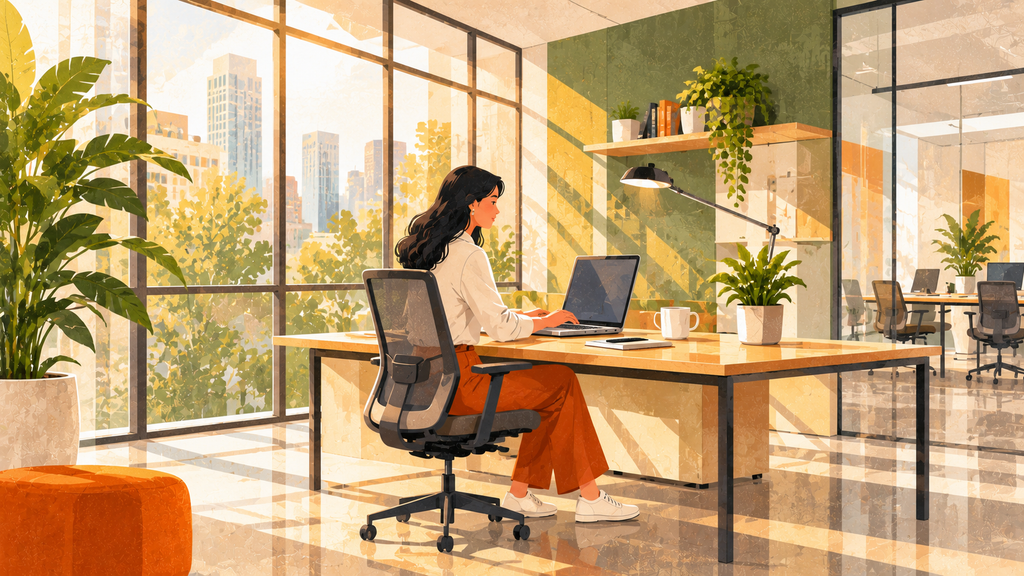
Natural light is one of the most valuable elements in workplace design. It can make a space feel open, connected to the outdoors and visually comfortable.
However, incorporating sunlight is not simply about installing large windows. The direction of the light, the position of workstations, the use of blinds and the potential for screen glare all influence how effectively daylight works within an office.
A desk placed directly in front of a bright window might offer an attractive view but create uncomfortable reflections on a computer screen. Similarly, poorly positioned windows can leave certain areas excessively bright while others remain dim.
Thoughtful planning balances daylight with suitable artificial lighting, allowing employees to work comfortably throughout the day.
Wall Colours and Their Influence on Mood
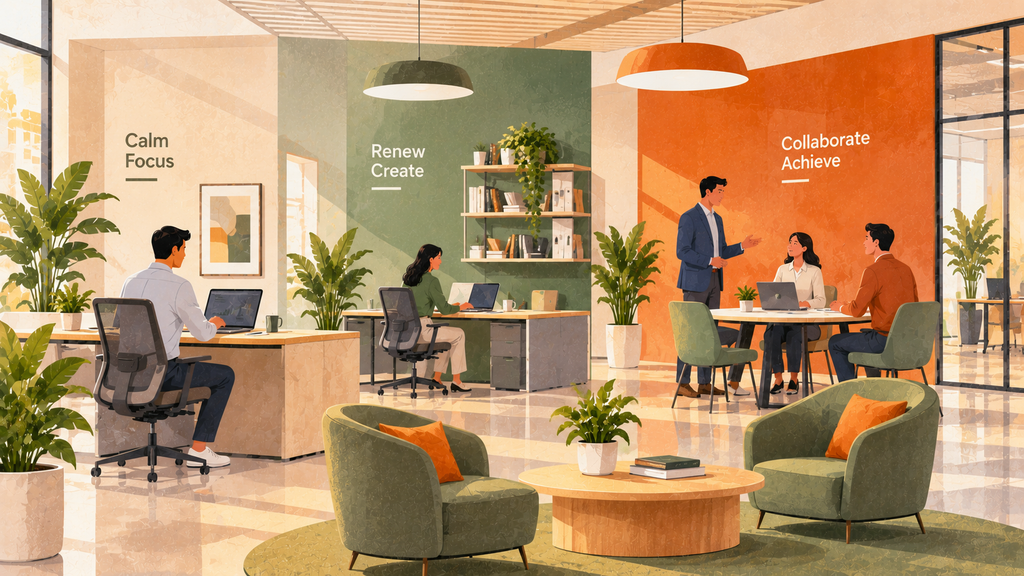
Color significantly contributes to creating the ambiance of a work environment. It affects the visual identity of a space and can enhance the image a company aims to portray.
Calm foundations can be established using neutral tones like warm white, beige, and gentle grey. Subtle greens and blues can bring a feeling of renewal, while strategically positioned vibrant hues can enhance energy and visual appeal.
The key is balance. Using too many strong colours can make a workspace visually distracting, while an entirely neutral environment may feel impersonal.
Instead of treating colour as a decorative afterthought, designers can use it strategically across walls, furniture, meeting areas and shared spaces to create a consistent visual experience.
Furniture That Supports the Way People Work
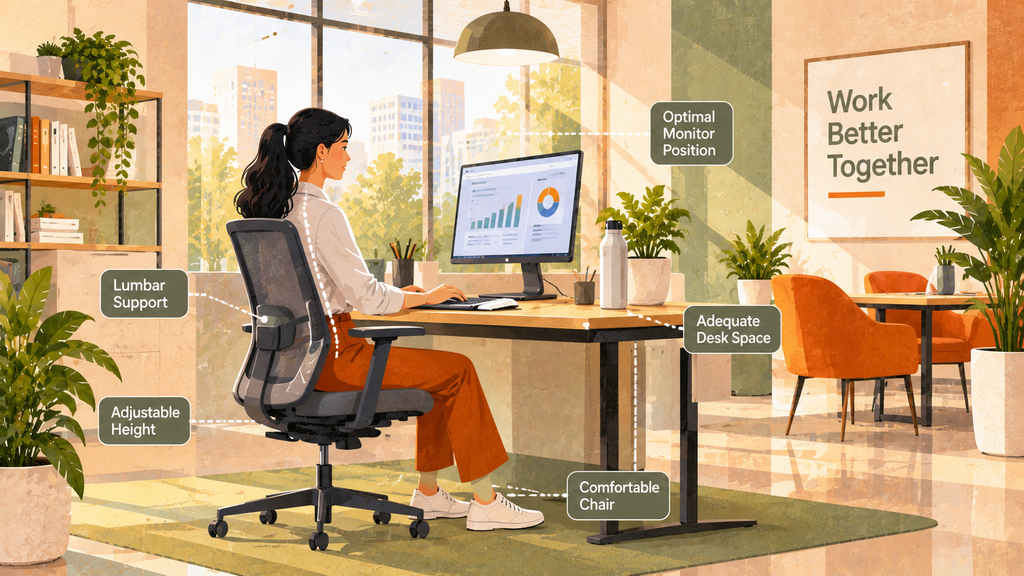
Furniture is where design meets everyday functionality.
An office chair might look elegant, but if it does not provide adequate support or adjustment, it can become uncomfortable during prolonged use. Similarly, a desk may complement the interior perfectly but still lack sufficient working space or legroom.
Chair height, lumbar support, armrests, desk depth and monitor positioning all contribute to a more comfortable workstation.
Furniture should also reflect the activities taking place. Employees performing focused tasks have different needs from teams collaborating around a table or visitors waiting in reception.
The best furniture choices balance appearance, ergonomics, durability and usability rather than prioritising aesthetics alone.
The Importance of Space Between Things
Effective workplace design involves more than just the elements present in a space. It is also concerning the area that remains between items.
Cramped work areas, tight pathways, and furniture arranged without considering movement can create an uncomfortable office atmosphere, even if the individual items are visually appealing.
Sufficient circulation space enables employees to move freely, reach communal amenities, and engage with each other without hindrances. It further aids accessibility and ensures the surroundings are functional for individuals with various mobility requirements.
Sometimes, the best design decision is not adding another element but removing one that is unnecessary.
Lighting That Works Beyond Daylight
Even offices with excellent windows require effective artificial lighting.
General lighting provides overall visibility, while task lighting can support activities such as reading, writing and detailed work. Accent lighting can highlight architectural features or create a more inviting atmosphere in reception areas and informal spaces.
The intensity, distribution and colour appearance of light all matter. Harsh glare, uneven brightness and poorly positioned fixtures can make a workspace uncomfortable.
Layered lighting gives designers greater control over different areas and activities. Meeting rooms, individual desks, breakout spaces and corridors do not necessarily require identical lighting conditions.
A successful lighting plan considers how the space will actually be used throughout the day.
Materials, Textures and Finishes
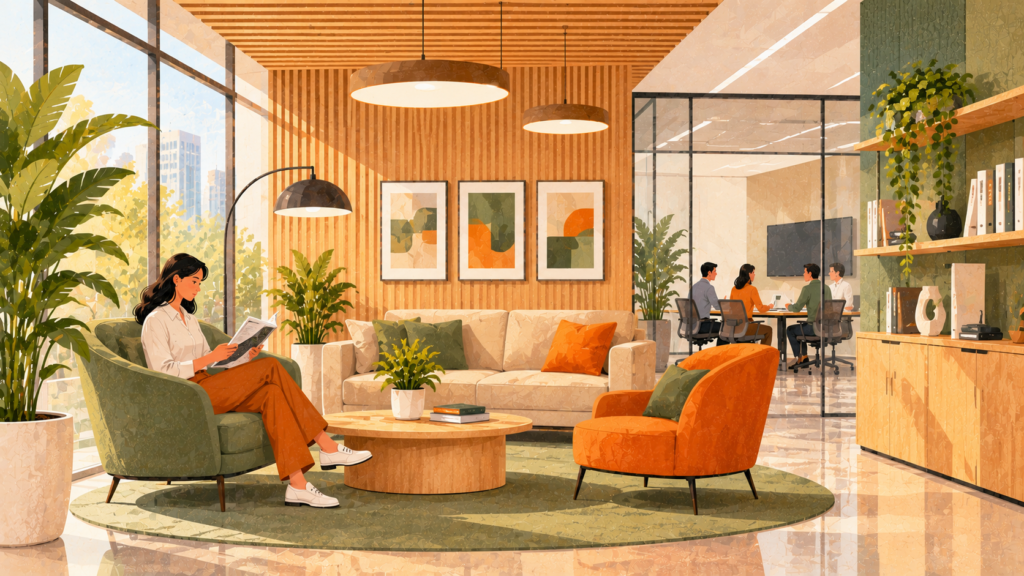
Materials and finishes influence an office’s appearance, comfort and durability. Combining wood, glass, metal and textured fabrics thoughtfully adds visual depth without making the space feel cluttered. While hard surfaces can create a cold atmosphere and increase echo, softer materials and acoustic panels help improve warmth and sound control.
Flooring should be durable, slip-resistant and easy to maintain. Even small details, such as desk edges, door handles, cabinet finishes and transitions between materials, contribute to the overall quality and functionality of the workspace.
Conclusion
Exceptional Workplaces Are Crafted Through Thoughtful Details
Great workplace design is about how light, colours, furniture, greenery, acoustics and space work together. Every detail influences how people experience their workday.
A comfortable chair cannot compensate for constant noise, and beautiful windows lose their value when sunlight creates screen glare. Every design choice should balance aesthetics with comfort and functionality.
Ultimately, a well-designed office isn’t just about looking impressive. It’s about creating a space that makes everyday work better.