Introduction
In a crowded exhibition hall, brands have only seconds to capture attention. With hundreds of exhibitors competing through striking displays, digital screens, and creative booths, attracting visitors is just the beginning. The real challenge is making them stop, engage, and remember the brand.
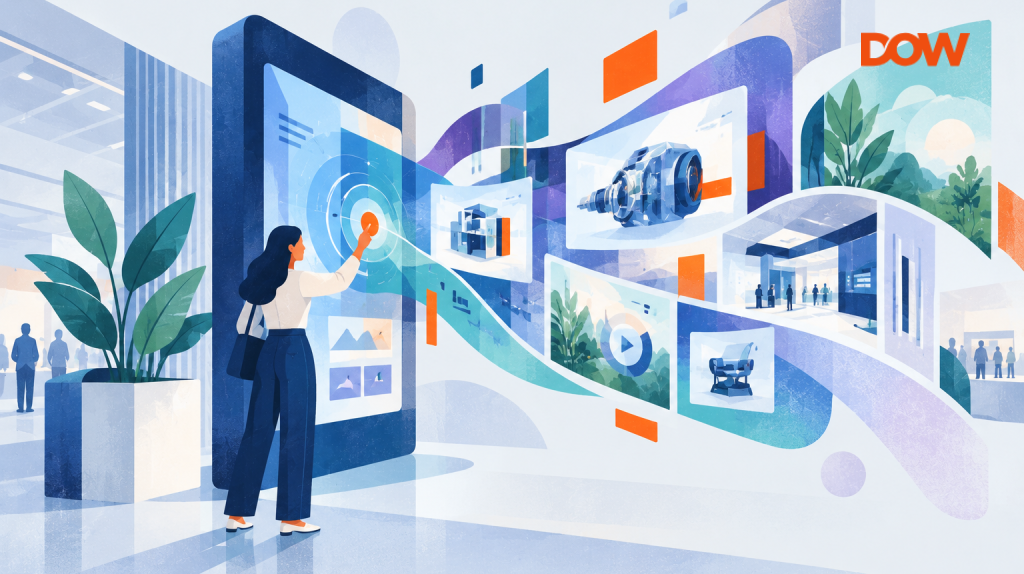
This is where interactive displays are transforming exhibition experiences. By using touchscreens, motion sensors, digital interfaces, augmented reality, and immersive content, brands can turn passive viewers into active participants.
What Are Interactive Displays?
Digital or technologically equipped exhibits that let users engage directly with products, content, or brand experiences are known as interactive displays.
Interactive displays react to visitor inputs, in contrast to typical screens that merely play films or presentations. To investigate a product, navigate a digital catalog, respond to inquiries, see product details, or participate in a virtual presentation, a user can touch the screen.
These displays can take many different shapes in exhibitions, ranging from interactive kiosks and massive touchscreen walls to digital product configurators and immersive projection experiences.
Making the visitor an active participant instead of a passive observer is the straightforward objective.
Why Interactive Displays Matter at Exhibitions
Exhibitions are built around engagement. Visitors are not just looking for information, they are looking for experiences that are interesting, useful, and relevant.
An interactive display can create that engagement in several ways.
They Capture Attention
Movement and interaction naturally attract attention. A static poster may communicate a message effectively, but an interactive screen can encourage visitors to explore further.
A well-positioned touchscreen, interactive wall, or motion-responsive display can serve as a visual draw in the booth, enticing customers to pause and learn more about the company’s offerings.
They Simplify Complex Information
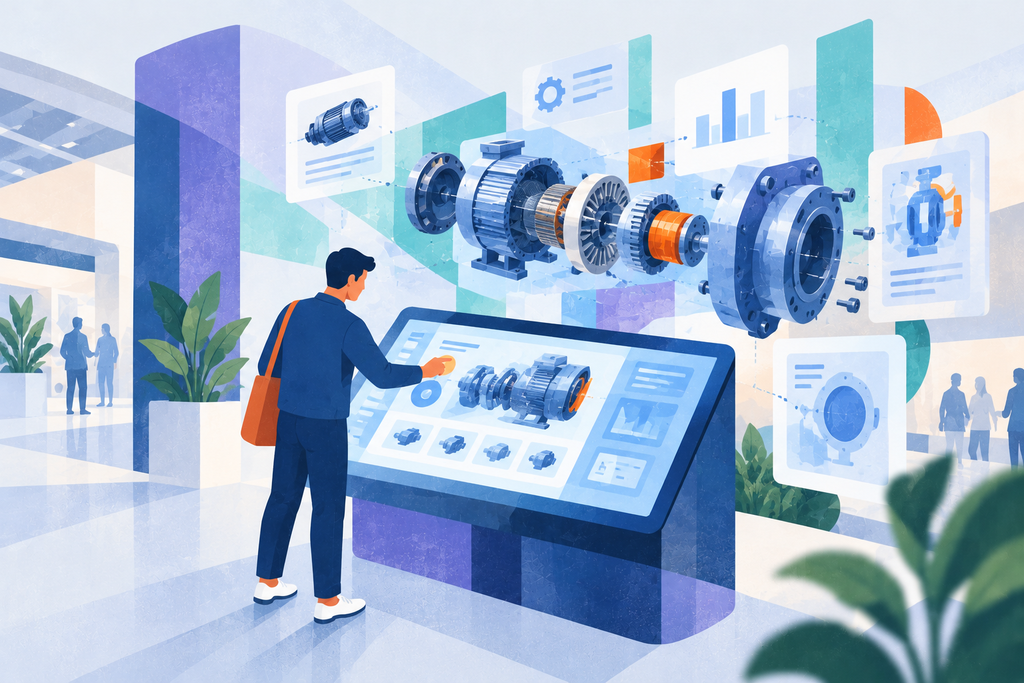
Pharmaceuticals, engineering, manufacturing, technology, and healthcare are just a few of the industries with complex goods and processes that can be challenging to depict with traditional visuals.
Information can be shown in layers on interactive displays.
For instance, a visitor can choose a product category, examine its characteristics, watch an animation, and access comprehensive specs only when necessary, as opposed to seeing every technical information on a single panel.
This makes it possible to communicate complex information in a more organized and interesting way.
They Enable Product Exploration
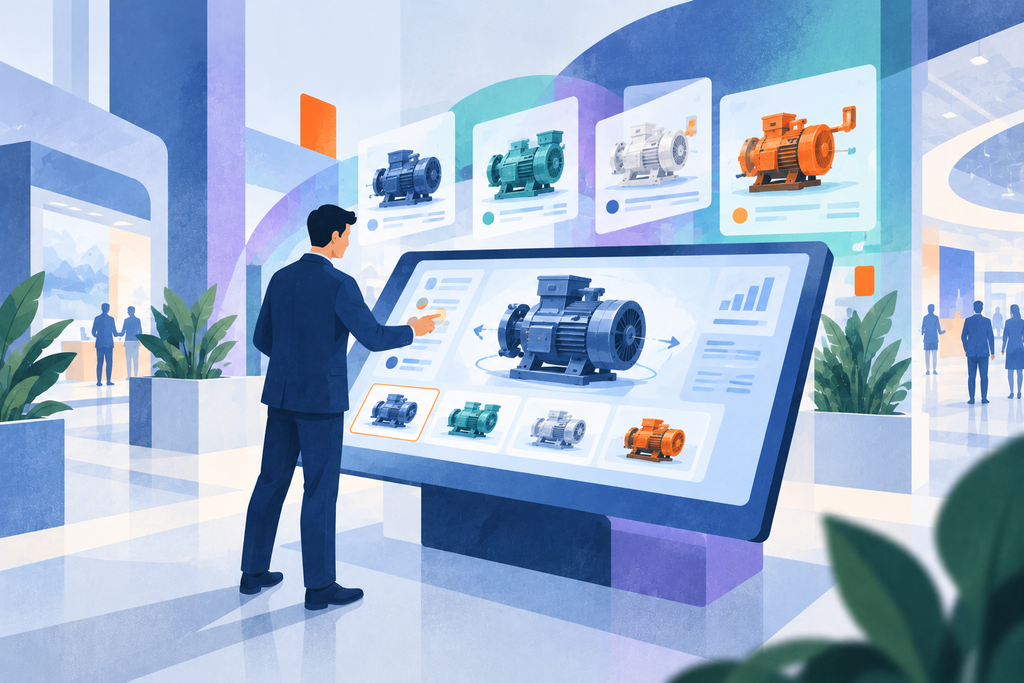
A major benefit of interactive technology is its capability to showcase products even when physical demonstrations are challenging.
A digital interface can allow visitors to rotate a 3D model, explore internal components, compare product variants, or understand how a system works.
For large machinery, industrial equipment, or technical solutions, this can be particularly valuable. A product that occupies several square metres physically can potentially be explored through a much smaller digital interface.
Interactive Displays Can Personalise the Experience
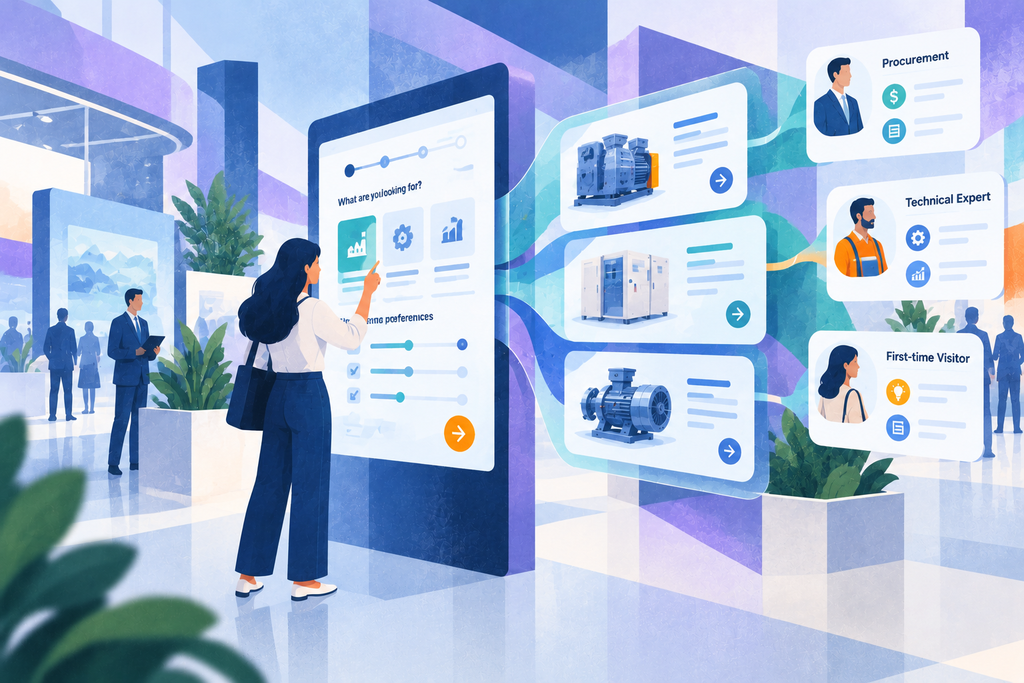
Each visitor to the exhibition possesses unique interests.
A procurement professional may want pricing and specifications. A technical expert may want performance data. A first-time visitor may simply want to understand what the company does.
Interactive displays can meet these varied requirements.
Rather than making every visitor go through the same presentation, brands can give individuals the option to select what they wish to investigate
This creates a more personalised experience and can make conversations between visitors and sales teams more relevant.
For example, an interactive product selector could ask visitors a few questions and recommend the most suitable product or solution based on their requirements.
The technology is not replacing human interaction, it is helping create a better starting point for it.
From Interaction to Lead Generation
Interactive displays can also play an important role beyond engagement. When crafted carefully, they can aid in lead-generation efforts. Guests can sign up for product demos, obtain brochures, ask for a meeting, send an inquiry, or provide their contact information directly via the interface.
This creates a connection between the physical exhibition experience and the brand’s digital ecosystem.
More importantly, the interaction can provide useful insights into visitor interests. Understanding which products visitors explored or which content attracted the most attention can help brands evaluate what worked during the exhibition.
The Future of Exhibition Experiences
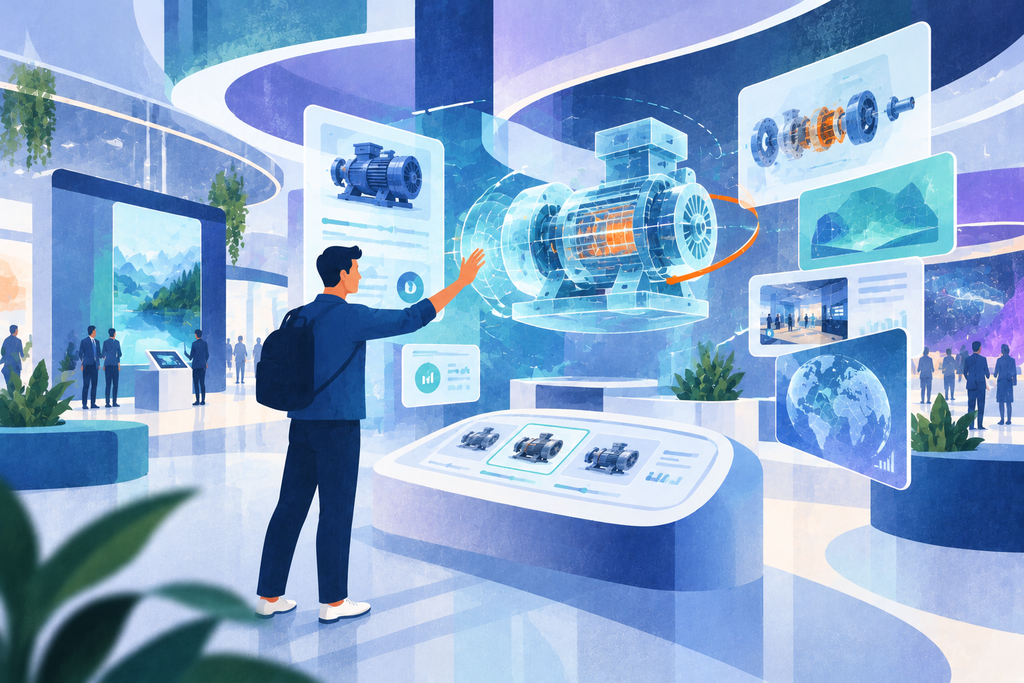
With the ongoing evolution of exhibition design, interactive displays are increasingly serving as a vital link between physical locations and digital experiences.
The future is likely to move beyond simple touchscreens toward more intelligent and immersive interactions. Gesture recognition, augmented reality, AI-powered interfaces, spatial computing, and personalised content can make exhibition experiences increasingly responsive.
An interactive display should not exist simply because it looks futuristic. It should help visitors understand something faster, experience something better, or discover something they would otherwise miss.
Conclusion
Exhibitions are no longer just about displaying products and distributing brochures. They are about creating experiences that attract attention, encourage participation, and remain memorable after visitors leave the venue.
Interactive displays give brands a powerful way to achieve this.
By combining thoughtful design, useful content, and intuitive technology, brands can transform their exhibition booths from spaces that simply showcase information into environments that invite visitors to explore, interact, and connect.
In an increasingly competitive exhibition landscape, the brands that stand out may not be the ones with the biggest screens but the ones that give visitors a reason to touch, explore, discover, and remember.