Introduction
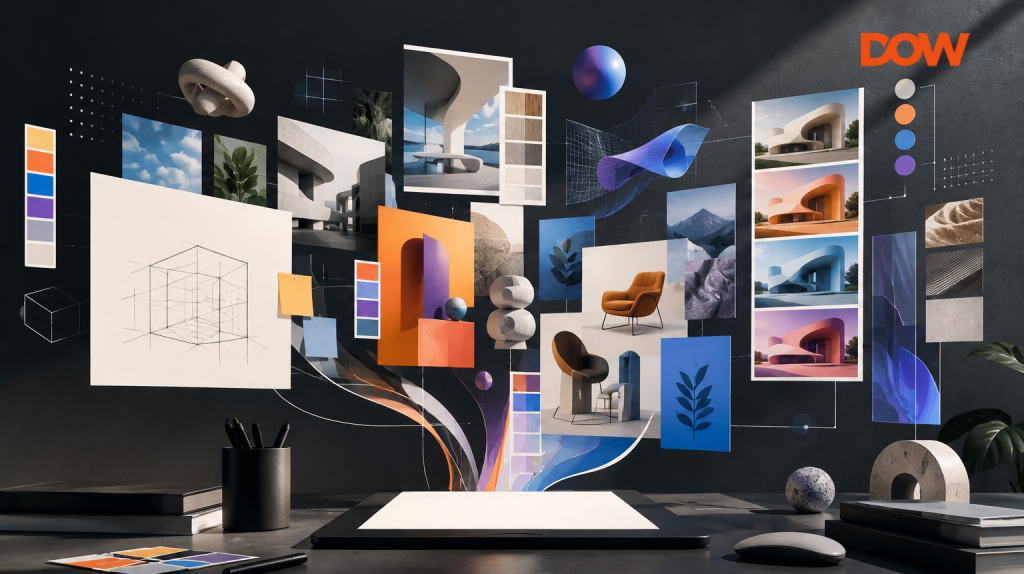
Artificial intelligence is changing the way creative work is approached, produced, and delivered. In the design industry, AI is no longer just a futuristic idea. It has become a practical tool that designers use for brainstorming, image creation, layout exploration, content development, and repetitive production tasks.
However, the biggest impact of AI is not that it replaces creativity. Instead, it is changing the creative process itself. Designers are spending less time on repetitive tasks and more time thinking about ideas, concepts, brand stories, and experiences.
From Blank Page to Creative Direction
One of the biggest challenges in creative work has always been getting started. Designers can spend hours looking for references, developing concepts, or trying different visual directions before finding an idea that works.
AI can speed up this initial phase. AI can be used by designers to build moodboards, explore various styles, generate visual references, develop basic concepts, or make several variations of an idea in a matter of minutes.
This does not imply that the initial AI-generated output is the finished design. Rather, it serves as a stepping stone . Designers can choose practical components, reject flawed concepts, blend several approaches, and refine the idea.
The creative role therefore shifts from simply creating every element manually to directing, editing, and refining ideas.
Faster Visual Exploration
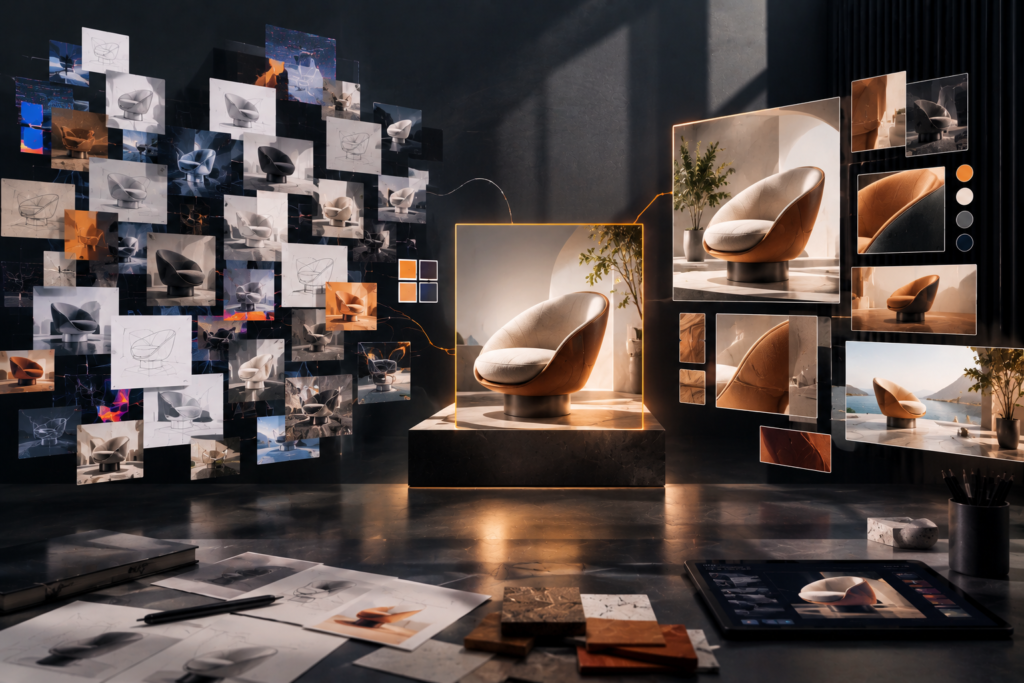
A designer would build one concept, present it, gather feedback, and only then spend hours working up an alternative.
AI speeds this up considerably. From a single creative brief, it can produce a range of visual options, varied layouts, colour palettes, photographic looks, and illustration styles. Designers can test various ideas before settling on one.
This flexibility is useful across branding, advertising, social media, packaging, exhibitions, and digital campaigns.
The designer remains the one who chooses the right direction for the brand and its audience. AI simply puts experimentation within easier reach.
AI and Personalisation
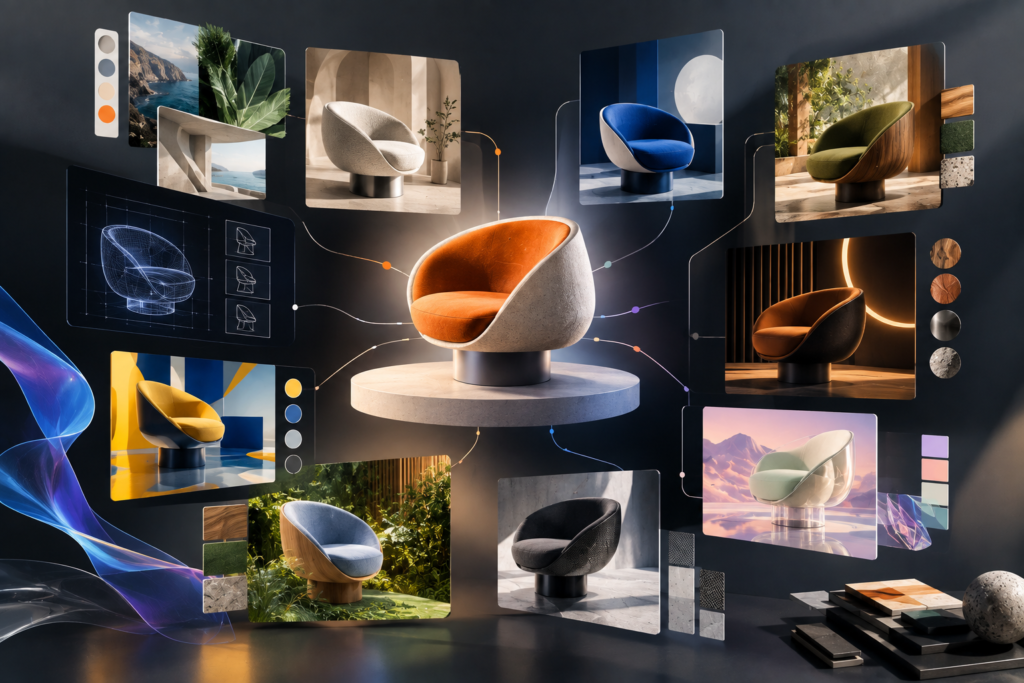
Another big shift is the rise of personalised content. Brands increasingly need 3D visuals that can be adapted for different products, audiences, environments, and campaigns. Building multiple 3D models with different shapes, materials, textures, colours, and lighting setups used to take a lot of time. AI now helps designers explore and generate these variations much faster, making the workflow more efficient and flexible.
This opens up new creative possibilities for designers. A single concept can become multiple versions while keeping the same brand identity and visual language. Whether the work is product visualisation, architecture, interior design, advertising, or exhibition design, AI lets designers try out different styles and environments without rebuilding everything from scratch.
That leaves designers more time to focus on concept development, visual storytelling, realism, and creative direction.
The Designer Becomes More of a Creative Director
As AI absorbs more of the production work, the designer’s role is changing. Future designers may spend less time carrying out instructions and more time deciding what should be made, why it matters, and how it should communicate.
That calls for stronger skills in creative strategy, storytelling, branding, visual communication, and critical thinking.
Knowing how to operate an AI tool helps, but a grasp of design fundamentals is still essential. Typography, composition, colour theory, hierarchy, spacing, visual balance, and brand consistency can’t be replaced by simply generating an image.
AI can offer possibilities. It’s the designer who gives them purpose.
The Importance of Human Creativity
For all its capabilities, AI doesn’t understand brands, cultures, emotions, or lived experience the way people do.
A generated image can look impressive and still miss the message. A layout can seem polished yet have no personality. A campaign can work on a technical level while feeling out of touch with its audience.
Human judgement matters because creative work is, at its core, about communication.
Designers grasp context. They interpret client needs, spot problems, understand audiences, make subjective calls, and give visual communication its emotional meaning.
That human perspective becomes even more valuable as AI makes it easy for anyone to generate visuals.
New Skills for the Design Industry
The rise of AI also means designers will need to pick up new skills. Creative professionals may increasingly need to understand prompt writing, AI-assisted image generation, creative automation, workflow optimisation, content systems, and AI-based editing tools.
But these skills should sit alongside traditional design knowledge, not take its place.
The most valuable designers will likely be those who pair strong creative fundamentals with modern technology. They’ll know when to use AI, when to leave it out, and how to turn AI-generated material into something distinctive and meaningful.
The Future of Design in the Age of AI
AI is changing creative work, but it isn’t removing the need for creativity. It’s shifting where that creativity gets applied.
Designers can now move more quickly from idea to exploration, automate repetitive production, create more variations, and try out possibilities that once demanded significant time and resources.
The challenge will be holding on to originality, quality, authenticity, and human connection.
So the future of design is unlikely to be a simple contest of “AI versus designers.” It’s more likely to be designers working alongside AI, letting technology take on what can be automated while people concentrate on what calls for imagination, judgement, emotion, and strategic thinking.
AI can produce an image in seconds. But making something people remember still takes a creative mind.
The designers who grasp this difference will be better placed to shape the next chapter of the creative industry.