Introduction
Office design has evolved dramatically over the past century. What started as rigid productivity-driven layouts has evolved into adaptable experiences; focused spaces that promote excellence, teamwork, and job satisfaction.
This shift didn’t happen overnight. It took approximately a century of rethinking what a workplace is actually for.
The Bullpen Era (1900s–1950s)
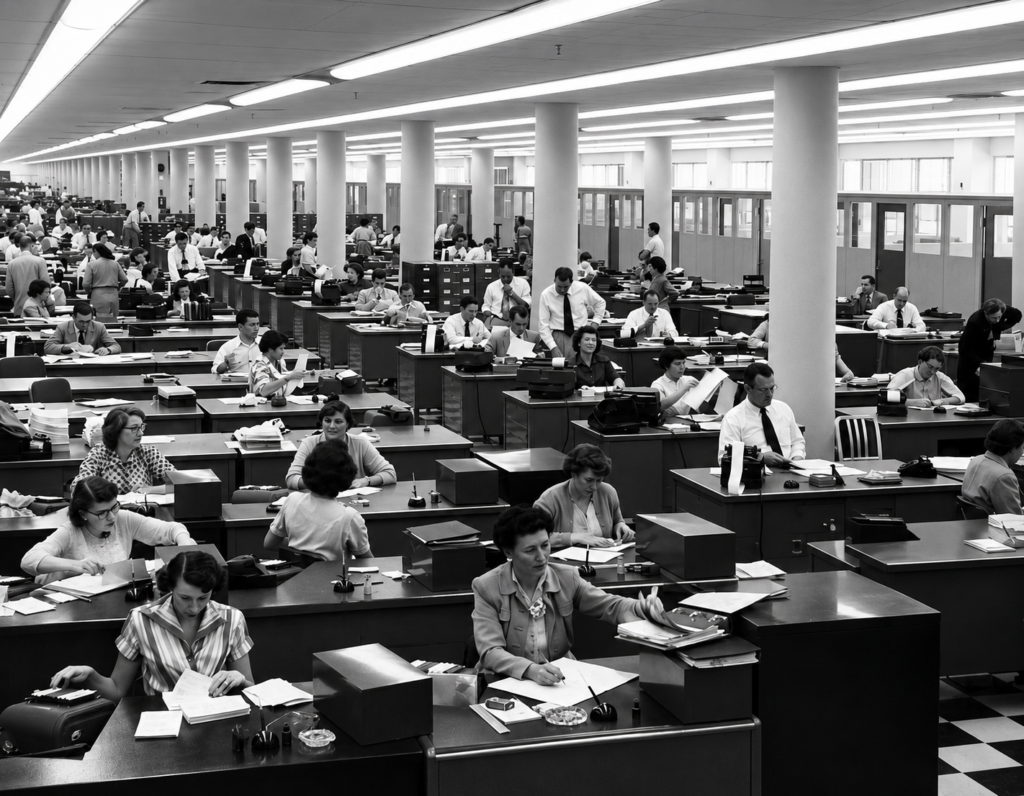
Row 1. Row 2. Row 3. Row 4. Yes, there’s a Row 47.
The earliest offices were modelled on one thing, efficiency and control. Employees worked in large open rooms. Managers could easily supervise activities as employees were seated in long rows of desks, ensuring maximum visibility across the workspace. Privacy was often viewed as unnecessary and even considered a distraction to productivity and oversight. The arrangement of the workplace demonstrated a distinct hierarchy; senior executives had private offices, while the rest of the staff worked in a highly formal setting. Comfort was secondary to functionality, and staff well-being, teamwork, and creativity were not given much thought.
The Cubicle Revolution (1970s–1990s)
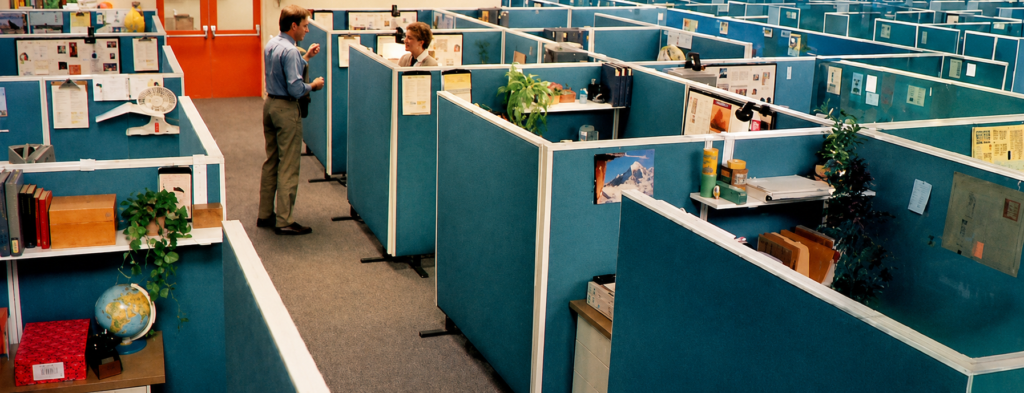
New era. Same coffee. Now with bonus claustrophobia.
As business grew, organisations looked for ways to provide employees with more privacy while maximising available space. The cubicle was introduced as a practical solution offering individual flexibility and focus, but then cubicles eventually became symbols of corporate cultures and gradually came to represent a monotonous corporate culture.
The Open Office Movement (1990s–2010s)
Open floors. Exposed ceilings. Ping pong tables. Bean bags. The message was loud – we’re not like the old companies. We’re different here.
Companies began eliminating barriers and cubicles in favour of open plan design due to the necessity for teamwork and communication. The concept was straightforward faster interpersonal relationships, promote teamwork, and develop a more dynamic workplace.
But open workspaces also brought with them new difficulties like noise interruptions and a lack of privacy. As a result, it made companies reconsider what workers actually required from their workspaces.
The Human Centred Workplace (2010s)
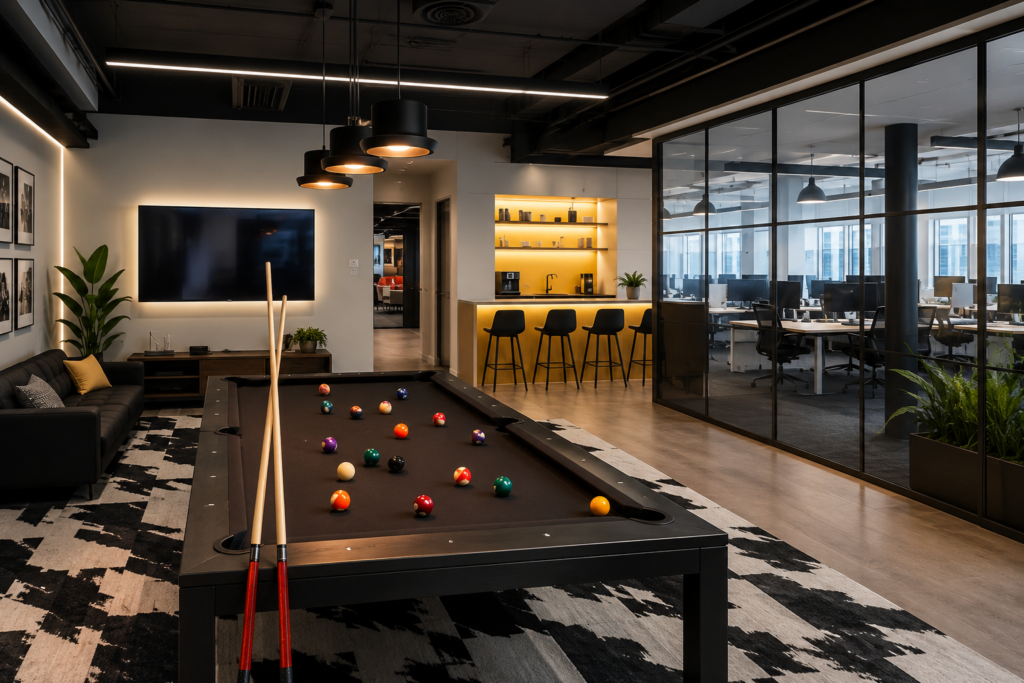
Turns out people didn’t want a ping-pong table; they actually wanted to enjoy coming to work. Somewhere along the line, businesses realised people don’t just work in offices, they experience them. Hence, companies stopped decorating offices and started designing them. The focus shifted from how a workplace looked and how it actually worked.
Real work, Real Dead Lines, and Real Monday Blues.
Thoughtfully Designed. Purposefully Placed. (Present)
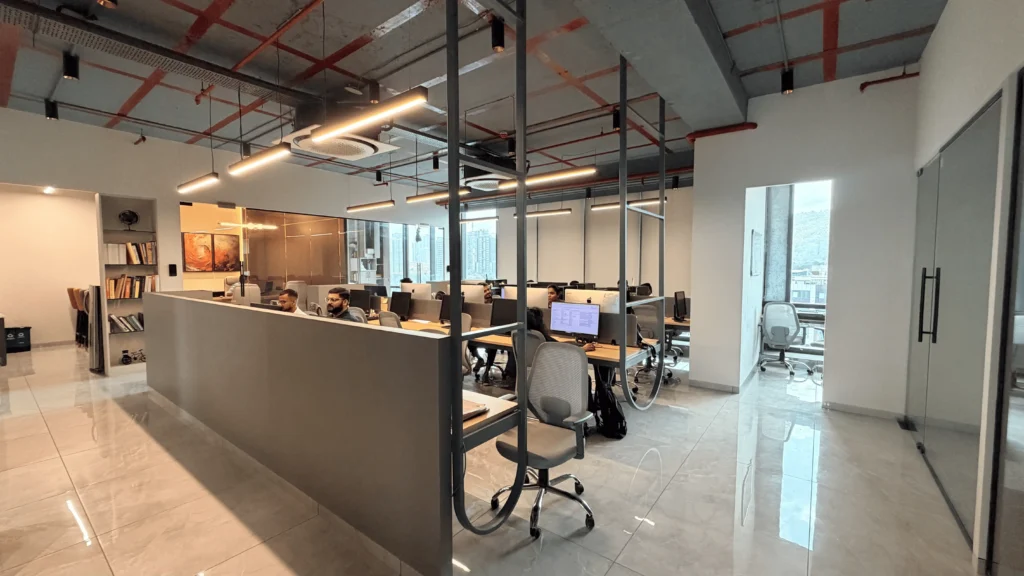
Light that didn’t wear you out by 3 p.m., furniture that did more than just look wonderful in pictures; it supported your body during an eight-hour workday. Spaces that were quiet when you needed to concentrate. Wellness corners for when you just needed to breathe.
Great workplaces don’t eliminate conversation; they simply give it the right place. Smart layouts and acoustic solutions create spaces where collaboration flows naturally without interrupting moments of focus. The brand is carried via finishes and materials. The colour scheme that runs from the elevator lobby to the final workstation, the texture on a reception wall, are all carefully picked. It conveys your identity even before you speak. Research demonstrates that conventional design, which incorporates nature through plants, natural materials, and lighting, lowers stress, enhances focus, and makes people truly want to come to work.
It Took A Century. But We Got There.
Office design has never been just about furniture or floor plans. It reflects how businesses value their people and the way they work.
From rigid layouts and isolated cubicles to today’s human-centered workplaces, every era has shaped the employee experience in different ways. Modern offices are designed with a purpose to balance productivity, collaboration, well-being, and flexibility.
At DOWXperiential, we believe great office interior design goes beyond aesthetics. It creates environments where people feel inspired, connected, and empowered to do their best work.
The spaces we nurture have a way of nurturing us in return.